Showing posts with label urban fantasy. Show all posts

Wednesday, January 3, 2018

AUTHOR INTERVIEW: KC Hunter


Tell me about yourself. What got you started in writing?

I started writing from a very young age in middle school. I used to create my own books out of folders with a hole puncher and do illustrations for the cover. Later in life, after drifting away from it for a while, I found my creative inspiration again and started dabbling in writing fantasy stories and horror shorts in my 30s.


Tell me about yourself. What got you started in writing?

I started writing from a very young age in middle school. I used to create my own books out of folders with a hole puncher and do illustrations for the cover. Later in life, after drifting away from it for a while, I found my creative inspiration again and started dabbling in writing fantasy stories and horror shorts in my 30s.

How do you schedule your writing time? When do you write?

I write whenever I can. The best times are late at night when the world is quiet and I can focus on nothing but the word. No promotions. No 9 to 5. No distractions.

How and where do you write? Do you prefer a laptop or some other method of getting your words down?

I write either on my laptop in the kitchen or on my main PC setup in my office. I type really fast so it’s way easier than longhand.

What's your favorite part of writing? Your least favorite part of writing?

My favorite part of writing is when the story starts to flow, especially dialogue. For instance, in The Brothers Locke, there are identical triplets: one is mute, one is legally blind, and the third is hard of hearing. It provides for some rather unique conversations. Plus, they all have different personalities which are accented by their disabilities and abilities.

My least favorite part is editing. Again, I type really fast so going back through and finding all the spelling errors is a pain but an absolute necessity as an indie author.

How did you come up with your book idea? How long did it take you to write your book?

I’ve had many of these ideas since I was a teenager. Right now, there are six series in my head. Plus, I just invented one called Kana Cold who is a young Asian female paranormal investigator (think Indiana Jones meets Jessica Jones in personality). That came from watching a bunch of those weird “Top 10” videos on YouTube about creepypastas, unsolved mysteries, cryptids, etc. etc. I thought “there is so much material here for a bunch of thriller/paranormal/mystery type of stories. I guess I’ll write it!”.

The Brothers Locke took a while to write as I was teaching myself to write in a different style, so about three months for the first draft. Recently, I’ve been writing a lot faster.
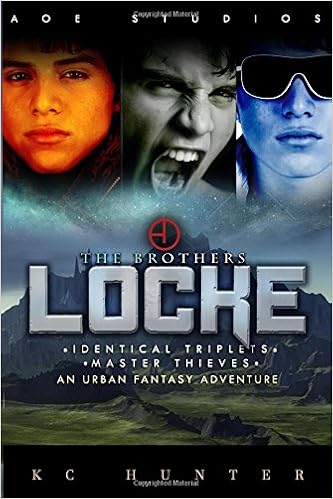
Get the Book on Amazon

What types of marketing do you do to promote your writing?

I run the spectrum. Last year I took Mark Dawson’s course for self-publishing and since have used Facebook ads, personal communication on Twitter, my own mailing list, promotional lists like FreeBooksy and Robin Reads, Amazon ads, and BookBub’s ad platform. I’m in the process of narrowing those down to the ones that work best for me.

What are you currently working on? Do you have a new book out?

Kana Cold will hopefully be out in February or March. I’ve had a fantastic time doing the research into these weird stories that are all over the internet and adapting them to a narrative that works.

Do you have a project on the back burner? Tell me about it.

I have tons of projects on the back burner. There’s the Dorian Delmontez series which I will start writing after Kana Cold. The Brothers Locke is a bit of a prequel to Dorian Delmontez so the foundation has already been laid. I want to do a serial or short fiction episodic series of novellas in the space opera/sci-fi genre. And there’s a trilogy I’ve had in my head since I was thirteen that is part Lord of the Rings and part Clive Barker’s Imajica that at some point I need to write.

So, there’s plenty in the head that needs to find it’s way onto paper and the screen.

What would you tell a beginning writer who wants to publish but doesn't believe he/she has enough talent?

First and foremost find the confidence in the story that you want to tell. No one else will believe in you if you don’t. I always go by the motto “There are at least 20,000 people who will like the story that you like. It’s your job to find them and let them know about it.”

You won’t start off as skilled at characters as King or as imaginative as Barker or as endearing as Rowlings, but you will progress through each book and find your own style and voice. Write more, write often, and learn from each book you finish.

Links:


Monday, February 23, 2015

AUTHOR INTERVIEW: Angela Hartley, author of Copper Descent and other works

Tell me a about yourself. What got you started in writing?

When I was little, I found myself daydreaming more than I paid attention in school. This, of course annoyed most of my teachers, but some recognized me for what I was and encouraged me to pursue a career as a writer. I was also defiant, and it took me many years to decide they were right.


How and where do you write? Do you prefer a lap top or do you prefer writing freehand?

I prefer to work on a small net-book, though something can be said about freehand. A connection takes place when I write this way that typing can’t quite obtain.

What's your favorite part about writing? Your least favorite part about writing?

I love creating, I love revision, I love feeling the connection to fans, and every step in between. The toughest part for me is the rejection. But who in their right mind would enjoy that?

How do you come up with your characters? Why would readers want to get to know them?

My characters pretty much shout in my head, “NOTICE ME!!!!” Readers like them because they’re colorful, yet real. They have Daddy issues, make stupid decisions, yet still manage to find a piece deep inside that calls them to overcome.

What types of marketing do you do to promote your writing?

This year, I've tried all sorts of things. I spoke on panels, I visited schools, I ran book promotions, and presented at writers conferences. All of this builds readership, but it isn't going to matter if you don’t have time to write the next work. Right now I’m working on creating a balance between the two aspects.

How do you schedule your writing time? When do you write?

I take my writing very seriously, and block a section of time each day to some aspect of the craft. All of my children are older, and I find it is easiest to work while they’re in school. The house is quiet, and I can get lost for a little while.

What are you currently working on? Do you have a new book out?

Right now, I’m working on Iron Resolve. In this Urban Fantasy novel, we follow Myke Preston—a man with a weak disposition. He walks away from his family only to find his world literally crumbling beneath his feet. The only way back to his wife and child is through a maze where he relives his tragic past. I deal with some pretty heavy issues in this story, drugs, infidelity, and child abuse. I also have two other books available, Copper Descent, and I have a short story in an anthology releasing this month, Secrets and Doors called Room 517. I like to describe Copper Descent as Pocahontas meets Paradise Lost, but with demon rock stars, and the Sundance Film Festival. Room 517 is a comedy piece about a high-maintenance modern girl who unknowing travels back into medieval times. It turns into quite the adventure when she realizes her controlling ex is actually a wizard determined to keep her forever.

Get the book at Amazon
Get this short story collection at Amazon

Do you have a project on the back burner? Tell me about it.

I have a crime/horror novel named D-Brie. Adrienne Morris thinks she might be a serial killer, but after losing her identity and memory two years before, she can’t be certain. This novel has it all—sex, violence, hypnotherapy, and a woman who may or may not burn people to a crisp whenever the word ‘love’ is involved.

What would you tell a beginning writer who wants to publish but doesn't believe he/she has enough talent?

Get out while you still can! No, really. I’m serious. But if you find your feet dragging as you head for the door, know this: It is a hard road full of rejection. If you don’t have faith in your ability as a storyteller no one else will. It takes 10,000 hours to master any art. Are you willing to put in the time to become great, listen to critique, and grow? If the answer is ‘Yes’, you have a shot. Talent takes a back seat to hard work any day.

***
Thank you, Angela!

Learn more about Angela and her books at the following sites:


Copper Descent: 


Monday, July 21, 2014

AUTHOR INTERVIEW: Carol Nicolas

Another great interview! Enjoy!

Tell me about yourself. What got you started in writing?  

I love to read.  Some of my biggest heroes are writers, so I've always wanted to someday emulate them.  I’d written poems and short stories most of my life, and as a teenager I wrote a romance novel, but it wasn't until my youngest son was in high school that I began to think seriously about writing books and getting published.


How and where do you write? Do you prefer a lap top or do you prefer writing freehand?

I prefer to write on my laptop at my desk, because then I can play with the words and add things as they come to me.  But sometimes when I wake up in the morning, I have ideas for the story, and then I jot them down on paper so I don’t forget.   

What's your favorite part about writing? Your least favorite part about writing?

My favorite part is writing the first draft, because everything is new and exciting.  It’s like reading a book for the first time, but it’s coming from my head to the computer screen.  It’s a blast.  My least favorite part is rewriting and editing, but I know it has to be done. 

How do you come up with your characters? Why would readers want to get to know them?

Many times my ideas for books start out with a dream about the main characters in full color, detail, and action.  When I start to write the story, it’s as if I already know them.  I then make a file about the characters and start adding details about them to fully flesh them out.  But sometimes I’ll be writing, and a character suddenly pops into the scene fully formed and starts saying and doing things.  It’s really amazing.  I hope readers would like to get to know the characters because they are interesting, and they feel a connection to them.
Get The Sixth Power
What types of marketing do you do to promote your writing?

I write several times a week on my blog (http://carolnicolas.wordpress.com).  As well, I have a Facebook page, and I’m on Twitter, LinkedIn, and Goodreads.  I have done a couple of blog tours.  I also have attended several writers’ conferences.

How do you schedule your writing time? When do you write?

’m usually busy with family, household chores, and walking the dog in the morning and evening, so most of the time I end up writing in the afternoon.  However, if there’s not too much going on, I’ll try to write in the morning as well.

What are you currently working on? Do you have a new book out?

I have a new book called City of the Giants that is being edited right now and will be ready to publish soon.  It is a YA Urban Fantasy that takes place in an alternate reality Chicago.  A piece of a Giant city has fallen on top of part of Chicago, causing destruction and death.  In order to contain the radioactivity and the Giant rats, the government builds a huge wall around the entire area, dooming the people inside to eventual death.  But then a magician and a teenage girl join forces to find a way to get rid of the City of the Giants and bring freedom to their people.  I’m very excited about it. 

Do you have a project on the back burner? Tell me about it.

I am currently writing a YA Sci-Fi novel about a girl who finds out she is half alien.  When a message from deep space comes to Earth proclaiming that all aliens must vacate Earth, Mia is already having a hard time.  After all, her mother has just been murdered, and her grandparents want nothing to do with her.  Mia is forced to leave behind her friends, her crazy but beloved aunt, and her mercurial boyfriend.  Her long-lost father turns out to be a drunk who owns a ramshackle ship built out of space junk.  The pilot is young and handsome, but she is allergic to him. Things only get worse when she finds out that Earth is about to be destroyed by an armada of locust-like creatures, and the League of Humanoid Planets don’t think it is worth saving. 

What would you tell a beginning writer who wants to publish but doesn't believe he/she has enough talent?

Keep on writing and creating!  It is only by writing that you become better.  Make sure you learn the rules of grammar, and read well-written books often to help and inspire you.  Prepare to spend many hours working on your craft.  Read books about how to write, take courses on writing, and go to writing conferences.  Above all, don’t give up.  The stories that you carry within you are unique, and you are the only one who can bring them forth.   

Monday, September 9, 2013

AUTHOR INTERVIEW: Angela Parson Myers

Find out where Angela prefers writing and why she "loves" revisions. Also, you might be interested in knowing how she works her time around her husband. It will make you smile.

1. Tell me a about yourself. What got you started in writing?


Angela Myers
My story really goes back to my birth. Honest. I was born the day my father was inducted into the Army Air Corps, and six weeks old when my mother took me to join him at the base where he was in training. I spent the first two years of my life on trains or in tiny living quarters near bases. The only thing that kept me quiet was reading to me. Anything. Sears catalog. Nursery rhymes. Didn’t matter. As I got older, I memorized my books and “read” them to my parents and uncles. When I finally started school and learned to really read, I read everything I could get my hands on. My parents had to be very careful what they left lying around.
 
Oddly, I still didn’t realize I wanted to be a writer until my junior year in high school when I finally admitted I wasn’t cut out to be a physicist. I took journalism in college and became a newspaper feature writer for several years, then later a writer/editor specializing in employee communication for a Fortune 500 corporation. When I retired, I pulled out the first draft of a novel I’d been working on for quite some time and did a “final” edit. After another couple of final edits, I had my urban fantasy. When the Moon Is Gibbous and Waxing, was published by Etopia Press as an e-book and early this spring also as a paperback.
 

2. How and where do you write? Do you prefer a laptop or do you prefer writing freehand?

I usually write stretched out on a chaise lounge in my living room. The first draft of my novel was written in longhand, but now I usually write on my laptop.
    
3. What's your favorite part about writing? Your least favorite part about writing?

Oddly, I really love revisions—doing the polishing. My least favorite part is that first draft, when every scene seems like a tooth being pulled.

4. How do you come up with your characters? Why would readers want to get to know them?

Usually I start with a vague idea—often from a dream. The first scene of Gibbous Moon, for example, started as a nightmare.  But nothing else happens until I have the name of the main character. They eventually kind of walk up to me in my head and say things like, “Hi! You know that girl who was attacked in the parking lot? That’s me. My name is Natalie, and I want you to tell my story.” Michael did the same thing. He was supposed to be a police officer with only a walk on part. I tried to write him out after that, and he refused to leave. “I kind of like that girl. I want to get to know her better,” he said. They aren’t always that forthcoming though. When they quit talking to me, I have writer’s block. I think they’re interesting people though, and I hope readers do, too.

5. What types of marketing do you do to promote your writing?

I’ve done contests, interviews, speeches, Facebook ads, and I have a Facebook author’s page. I’ve posted samples of my writing to my blog at http://www.angelaparsonmyers.blogspot.com and I’ve appeared as a guest on others’ blogs. I go to writers’ and readers’ conventions. I’m a Goodreads author.

6. How do you schedule your writing time? When do you write?

I have the good fortune to be married to a man whose schedule is out of sinc with mine. He’s an early riser, then poops out mid-afternoon. When he goes down for a nap, I start writing. It’s a little like scheduling around a baby except that if I’m on a roll when he wakes up, I can tell him to be quiet while I keep writing.

7. What are you currently working on? Do you have a new book out?

I started a sequel to Gibbous Moon and got about 7,000 words into it. Then I had a dream that just had to be turned into a sweet romance novelette. I’m nearly finished with the first draft, then I’ll go back to the sequel. When I finish it, I have another sequel started and a fourth partially outlined.

8. Do you have a project on the back burner? Tell me about it.

I have the first draft of one of a trilogy of dystopian science fiction novelettes in my files and the second novelette started. It’s about a government project that involves people with paranormal abilities. I also have another far future SF novel about galactic colonization partially outlined.

9. What would you tell a beginning writer who wants to publish but doesn't believe he/she has enough talent?
   
What was that I saw on Facebook the other day? “More plans are ruined by lack of confidence than by lack of talent.” Something like that.

That said, you go about learning to write like you go about learning to sink baskets—you keep practicing. You take writing classes in school. You read the many good books about how to write. And maybe most importantly, you find a group of people who also want to learn to write and you critique one another. Just remember to be gentle. Even after being a professional writer for 20 or so years, I take classes at writers’ workshops and I have two critique groups.

Then you start submitting. You can submit to an agent or to a small publisher, depending on what you want out of your writing and realizing that very few authors actually make a living writing. In other words, don’t quit your day job until you’re bringing in enough money from writing to support yourself.

Notice I don’t recommend that you publish yourself. This is because you still have a lot to learn from a professional editor and because you need the validation of acceptance by an agent or publisher.

Above all, you keep writing, and you keep learning, and you keep submitting. The only true failure is failure to try.
 
Learn more about Angela:

 
blog
Facebook
Twitter
 
Find her book at: