Showing posts with label first drafts. Show all posts

Wednesday, March 21, 2018

Thursday, April 2, 2015

First Draft Revisions Made Easy


As some of you may know, I've been working on the third book in the parable series entitled, The Gift: A Parable of the Key, which will be hitting the online sky waves come September. 

Since I'm sitting here in this very category at this very minute, I thought it would be the right time to talk about first drafts.

Here are some things I am noticing where revisions are necessary.

1. Typos.
2. Sentence structure issues.
3. Necessary plot insertions.
4, Sentence clarification issues.
5. Word choice.

Allow me to tackle each of these revision issues briefly:

1. Typos are probably one of the most difficult things to catch unless you're red flagged by your computer. Some typos are obvious, others, well, try reading your story out loud to get those pesky typos out of your work.

2. Again, reading out loud will help with sentence structure issues. If you don't want to read your work out loud (though I highly recommend it) consider any time you stop at a sentence and have to re-read it, or you find yourself wondering what you meant.

3. I have a scene in my book that I've added to the plot since the first write, and I may find as I continue to read that another one is necessary. I noticed the vacancy of this scene when I got to a particular scene and realized that there was not enough previous set-up to make the scene believable.

You can't have people angry, for example, unless there are scenes previous to the explosion that sets everything up. When the explosion finally happens, the reader says in their head, "Well, yes, I can see that happening, when they did this and this..."

4. I may have thought my sentence was as clear as the day sky when I wrote it, only to re-read and discover the skies were likely filled with black clouds. Sometimes, to clarify the sentence, I must add to the sentence, at other times I must start completely over.

5. I don't know how many times I re-read only to find that a certain word 'just doesn't fit' with the scene. Either the word is too harsh or too soft, or a particular character uses it; one I might add, that wouldn't for the life of them use that particular word.

First drafts might be a bit - tedious - but consider the improvement of your work after the first draft is finished. You wouldn't want to send your beta readers a manuscript riddled with weeds anyway and focusing on these editing issues early on will make their reading experience that much sweeter.


Thursday, March 7, 2013

First Drafts

Okay, you guys, I'm almost finished with my first draft of The Feast: A Parable of the Ring. I've just got to add the spiritual guide at the end of the book to make it reflect what I did on the first book, Conquering Your Goliaths: A Parable of the Five Stones.

First drafts are kind of like all the warmth and inner stuff mixed in with some awkwardly constructed sentences and paragraphs. There is joy, and there is yet work.

When I finish my first draft of anything, I usually feel a sense of relief, and then reality kicks in and I realize that it's going to need some editing.

I usually do this in one of two ways:

1. I have some of my writer friends read and critique it
2. I put it out to readers who usually read my genre

Either or both options have helped me thus far, though I will admit hiring a paid editor would also work.

I've spoken a lot about editing, but not much about perspective. It seems like when I write something and I see it, that the seeing doesn't always translate into the same reading material for others. Sometimes this frustrates me, especially when I've worked hard on a scene or phrase and someone editing my book doesn't like it, or 'get it.' There are times I wonder if what I've written has really come from my heart.

When I get feedback that doesn't go along with my game plan, I usually do one of two things:

1. I read the book again out loud (with their suggestions inserted and compare it to my original)
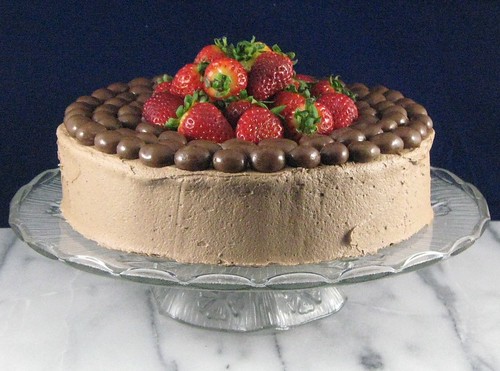
Photo by: Chocolate-Dessert-Recipes.com, courtesy of Flickr
2. I ask someone else reading the same passage what they thought of it. This usually gives me a good clue if the scene or sentence is really working, or if the problem is just a differing opinion.

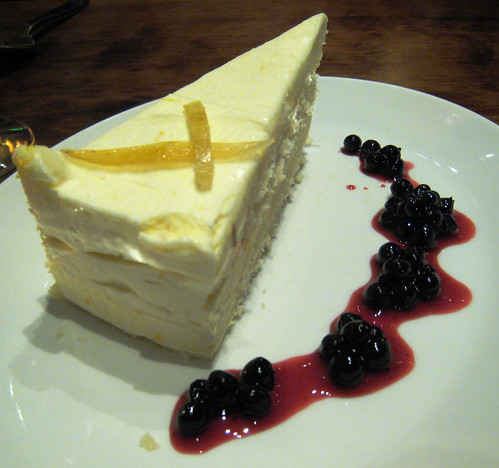
Photo by: Charles Haynes, courtesy of Flickr
Just because I like chocolate cake, for example, doesn't mean that everyone does. They might like strawberry or lemon chiffon.

The good news is that, in this case particularly, I can see where they're going, even if it's down another lane.

We all travel down different lanes, and we learn what we need to learn from the words we read. Who says we all need to learn exactly the same thing at exactly the same time?

Have you ever written something that a reader took a different way than you originally meant it? I'd like to hear about it.