Showing posts with label editors. Show all posts

Tuesday, March 3, 2015

Blizzards: What it Means For You in Your Writing


This morning, as I was taking the grand kids to school I met up with a blizzard! Snow starting blowing sideways (still is after an hour). You should have seen me trying to leave the parking lot!

Anyway, here I am in my nice cozy house, hoping that the streets somehow get cleared before I have to pick up my grand daughter at around noon and my grandson at almost four. I don't have the best car. Let's just say it's of an older generation, and though the tires are fairly new, they aren't snow tires :)
The good news is that the snow storm is providing us with much needed water, and some nice ideas for my blog post this morning.

It's hard to see in a snow blizzard isn't it? And hopefully you drive a little slower, and keep a bit more attention on the road when it does. I was thinking this morning as the side windows fogged up (I was trying to keep the front windshield defogged) how interesting and a bit irritating it was to open and close the windows so that I could see clearly enough to turn.

It's also hard to see through a book or story you've lived with for awhile. The problem with this sort of seeing is that it might be an invisible blizzard, an invisible fog. The only way you can see that there's really a problem is by having someone else read your work.

Consider your reader as one standing outside in the sun. It's summer for them and they can see all kinds of mistakes in your manuscript because they haven't been living with it like you have. Besides, the sky is bright. For all intents and purposes, consider your reader as if they are on vacation, the clarity of life open to their view because all of the stress has been left at home.

Not so for you. You aren't on vacation and know almost all of the words of your book by heart. And that's the trouble. Perhaps you are seeing through rose colored glasses now and are totally missing what's really written.

It's kind of funny to think about, but perhaps the best vacation you might take right now is one away from your manuscript. Don't look at it for at least two weeks. Don't even peek. Let your editor, your beta readers, whomever you have chosen to read your work, read it. And don't hover, please don't hover. Take a break.

You deserve it.

Wednesday, January 28, 2015

The Wednesday Sandwich and Writing

I love sandwiches--if I have decent bread. No cheap stuff for me. I also like good stuff in the center. You know. Nice ham or turkey with all of the trimmings.

Cheap bread is a little like cheap writing. Cheap ingredients like the old tuna fish in the refrigerator will never satisfy me.


When it comes to your own writing you may say to yourself: "This is good enough, I really don't need to go through another edit. Please..."

But maybe, you do.

In-between the first draft and the end of your book, there's this lovely land of polishing that must take place, though you may agree with me that even after all of the polishing, the smoothing out, one or two errors still manage to find themselves within your work. :)

I've had this happen more times than I'd like to admit. And that doesn't mean I haven't gotten beta readers and editors to go over my work. And it doesn't mean that I haven't re-read my manuscript that final time for those little 'squeakers' hiding out.

But there is something about the middle of the sandwich; maybe it's the juicy taste or the stale re-reading that gets me down, but, try as I might, though the top piece is good and the bottom piece is yummy (I love the beginning and I love the end) there is something that can get lost in the middle like that piece of ham, if I'm not careful.

And I want to be careful, because I want my work to be the best, complete sandwich, if you will.

Other than editing, there are many things I need to look at when it comes to my Wednesday sandwich. Are my characters individuals? Can I take out most, if not all, of the 'he said' and 'she said's' and still know who is speaking because of their individuality?

Is my setting real, or am I running again above the distant cloud with nowhere to plant my feet?


What about the plot? What about timing?

Like a proper sandwich, everything in your book should be in it's proper place, and the best ingredients should be used for the best results.

Agree?

Kathryn

Wednesday, April 10, 2013

Best Linkedin Writing Groups

Recently, I have discovered the power of joining and participating in Linkedin writing groups.

I had a thought come to me that wouldn't leave me until I'd followed through: Share with those on your writing groups about your new book, Marketing Your Book on a Budget 2013.

Photo by: TheSeafarer, courtesy of Flickr
The idea seemed good; weren't all those in writing groups at one time or another going to be interested in how to best market their book?

And so I went in and spread the word.

Let me just say, word about my book spread like wildfire. In minutes people were chatting about it, asking questions, and telling me that they were going to go over to Amazon and get the book.

I was smart without really even knowing it.

I'd sent along this information, not at just any old time, but during my 3 day Amazon FREE eBook promotion.


I'm glad I fell into this idea, but I wanted you to know about it so that you could use it to assist you in your next book promotion. So, without further ado, here are my favorite Linkedin writing groups:

Aspiring Writers
Authors & Writers of Fiction and Non-fiction
Book Marketing
Books and Writers
Christian Authors, Editors, Publishers, and Bloggers

When you join with any of these groups, make sure that you participate, and that means asking questions of other authors, answering the questions they pose, and sharing your latest news or insights.

What makes a writing group great is the give and take of all of its members.

Thursday, March 7, 2013

First Drafts

Okay, you guys, I'm almost finished with my first draft of The Feast: A Parable of the Ring. I've just got to add the spiritual guide at the end of the book to make it reflect what I did on the first book, Conquering Your Goliaths: A Parable of the Five Stones.

First drafts are kind of like all the warmth and inner stuff mixed in with some awkwardly constructed sentences and paragraphs. There is joy, and there is yet work.

When I finish my first draft of anything, I usually feel a sense of relief, and then reality kicks in and I realize that it's going to need some editing.

I usually do this in one of two ways:

1. I have some of my writer friends read and critique it
2. I put it out to readers who usually read my genre

Either or both options have helped me thus far, though I will admit hiring a paid editor would also work.

I've spoken a lot about editing, but not much about perspective. It seems like when I write something and I see it, that the seeing doesn't always translate into the same reading material for others. Sometimes this frustrates me, especially when I've worked hard on a scene or phrase and someone editing my book doesn't like it, or 'get it.' There are times I wonder if what I've written has really come from my heart.

When I get feedback that doesn't go along with my game plan, I usually do one of two things:

1. I read the book again out loud (with their suggestions inserted and compare it to my original)
Photo by: Chocolate-Dessert-Recipes.com, courtesy of Flickr
2. I ask someone else reading the same passage what they thought of it. This usually gives me a good clue if the scene or sentence is really working, or if the problem is just a differing opinion.

Photo by: Charles Haynes, courtesy of Flickr
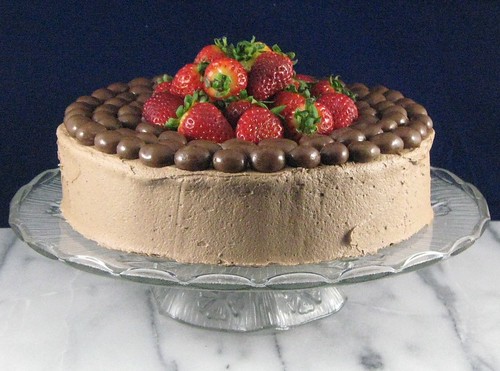
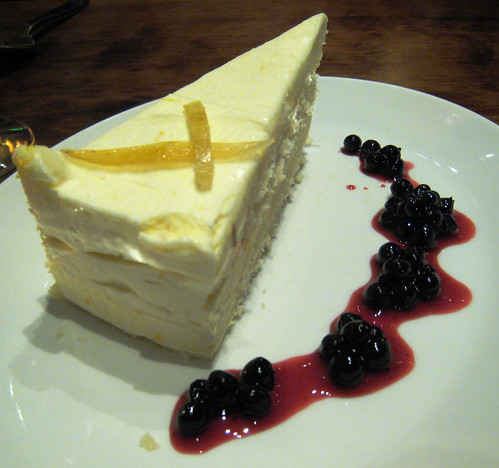
Just because I like chocolate cake, for example, doesn't mean that everyone does. They might like strawberry or lemon chiffon.

The good news is that, in this case particularly, I can see where they're going, even if it's down another lane.

We all travel down different lanes, and we learn what we need to learn from the words we read. Who says we all need to learn exactly the same thing at exactly the same time?

Have you ever written something that a reader took a different way than you originally meant it? I'd like to hear about it.


Wednesday, August 29, 2012

League of Utah Writer's Conference: Update for 2013

If you've never joined in on a conference, or spent some time one-on-one with an agent, you'll want to consider the League of Utah Writer's annual conference. The date is: September 13 &14.

Especially if you're a new writer, learning the ropes and trying to find your niche, this conference offers valuable classes and other opportunties you can't afford to miss.

The conference will be held at the Hilton Salt Lake City Airport
1-801-539-1515
5151 Wiley Post Way
Salt Lake City, Utah

Learn more at: http://www.luwriters.org/.

One of the fun options at the League of Utah Writer's conferences is the opportunity for you to purchase books from published authors as well as learn about new publishing companies that have just joined the ranks.

If you want to learn more about Idea Creations Press; how to get your paperback or e-book out there, you'll want to stop by my table on Saturday. I will have freebies for you to take home, including information on how to get your dream book published!
 
Stop by my table and mention that you read my blog and receive a FREE special gift. I would love to meet you!

Get the newest version of Marketing Your Book on a Budget AUTOGRAPHED by me for only $5!


Monday, February 27, 2012

Cover Letters and Manuscripts

Saturday I spoke about query letters, those necessary evils that one must know how to do and to do well. I spoke about editors not being able to publish everything they love, that sometimes--yes--even editors go through a divorce, and that even if an editor likes your work, that doesn't mean that they will publish it.

Today I want to talk for a minute about cover letters and the difference between a query and a cover letter. I also want to uncover some things you may not know about cover letters.

  • Because a query letter is sent alone, without the manuscript, it's a good idea to include the most important details within the letter. With a cover letter, however, you send it as the front-is piece before your manuscript, and so the letter will be less about the details and more of a conversational letter to the editor. 

Photo By: rmkoske, courtesy of Flickr

  • In other words, a query letter talks about the book in glowing terms, it shows the editor through summary, plot and other important writing ingredients that you use, that the editor should consider your work. With a cover letter, your work, (or at least the first three chapters of it) are already in the editor's hands. You don't need to try and "sell" your work like you'd do in a query, rather, you thank the editor for taking the time to review your work and you detail in the cover letter what you've sent to him/her.
  • At this point, the editor has either asked for the manuscript because of your terrific query, or they are asking, through Writer's Market, that you eliminate the query; what they want to see is the first three chapters of your manuscript, a synopsis of the story and maybe even a chapter by chapter synopsis of the story. They may ask you to specify other things in your cover letter such as your marketing suggestions for the book, or why you see yourself as the best person to write this book, but these details will be shared within Writer's Market.
  • Gathering these things and getting them ready for submission will take you some time but you will make the time worth it if you spend some focus time on your cover letter. Don't just send your manuscript without remembering this important front-is piece.
  • Again, make sure you address the editor by name and construct your letter just as you would do a query. Thank the editor for his/her willingness to read over your work. Tell the editor the name of your book, (or remind them if they've said yes to your query) the book's genre, how many pages the book has, and let the editor know what you've included: "I have included the first three chapters of the manuscript and a one-page synopsis of the story as well as an SASE for the return of my manuscript." 

Basically the cover letter just informs the editor of what you've included in the package. It tells him/her that she can expect to read the following documents.

The cover letter is short, not more than a page, and many of mine are about half that length. It's your manuscript that's really going to "sell" the editor this time. Just make sure the cover letter is polished, conversational (but still professional), and worthy enough to have that editor turn the page to see chapter 1.