Showing posts with label reflection. Show all posts

Saturday, January 8, 2022

Starting the monumental task of writing a book

Just this morning I was placing my stuffed animal frog on my bed when an idea for a children's picture book 'hopped' into my mind. My first thought was, "This is incredible! I have to write this down before I forget!" 
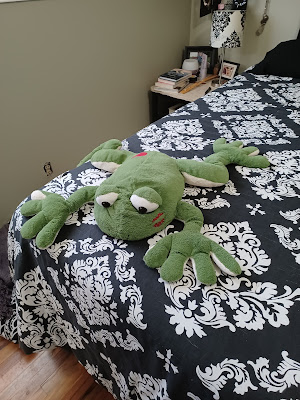
I ran to my computer and wrote the title and the short synopsis that came to me on a sticky note. It is hanging up right here where I sit and write.

Now comes the hard part. I've got to write it.

What should I do first? 

I have learned through the years the time of reflection should not be hurried. The reflection time is sort of my idea-gathering time. It's the time when  I consider the different ways the story might travel. Though I am a by the seat of my pants sort of author, I always have some idea of where I want my story to travel. And this idea takes me to the next step.
Photo by Sage Friedman on Unsplash

Writing the first draft. Please think of this time as the time to let your thoughts and feelings come through your fingertips and onto the page. This is not the time to edit. I HAVE TO REMEMBER THIS EVERY TIME I WRITE SOMETHING. Stop. Do not edit. Keep writing. Remember, stop. Stop. The first draft is kind of like living a fantasy life where you get to do anything and everything you want. The idea is to get your story out, not to block this time with whispers of fixing things. Give yourself some time with this. Don't hurry it. Spend as much time as you need.

The second draft will be up for view before you know it, and especially with picture books, it's important to make every word count. 

Photo by Duy Thanh Nguyen 
on 
Unsplash


Photo by howling red 
on 
Unsplash


This is the time to take out the words that do not contribute to the overall story. This is the time to correct run-on sentences. This is the time to look at the meat of the story. What are you trying to tell your reader? What do you expect them to learn without spelling it out?


Photo by chris liu on Unsplash


The final draft can be your third, fourth, or even your fifth draft. This is when you make sure your spelling is correct, your beginning is superb, and your ending is just as it should be. 

During the stages of writing a book, no matter what genre of book it is, I am thinking of the cover and what I want my future reader to know about the book even before they've flipped through a few pages or read the back cover. I start thinking of an illustrator. For my fiction books, I usually buy a stock photo that can be turned into a cover. 

Writing a book is a little like living a life where changes ultimately will need to be made. You might even want to consider your life. What changes have you made to make your life better? You can walk the same path with your book. 


Tuesday, July 2, 2019

What do you do when it's hotter than blazes?

No surprise here. 

You write.

Image result for summer pictures

My newly titled book: Enlightened: My Personal Journey with Christ Through Scripture Journaling is in the beta stage. This is a tender book for me, and I'm not sure at this moment how or if it will be released in the traditonal way. I'll keep you posted.

I spoke to a friend recently about my hesitation in putting this book on Amazon and she shared with me an experience she'd had recently about going to a gathering. The gentleman there shared his inspirational book but admitted that the only way the book could be purchased was from him.

Even before this information was relayed to me, I was thinking about my own book, and what needed to happen with it. As you can see, I am still unsure.

Sometimes in writing, you make time not only for writing but for reflection. 

And I guess you could say that I'm doing that.

May your summer be warm and filled with all of those things you love the most.

Kathryn


Tuesday, October 10, 2017

TUESDAY TRAILERS: As a writer, do you take time out to reflect?


Today is World Mental Health Day.

What are you doing for your mental health? Do you take time to reflect, or are you so busy 'doing' you can't think straight?

How does reflection help you as a writer?

Find out.

Wednesday, April 3, 2013

Wondering What's Next?

I don't know about you, but I'm continually wondering, "What's going to happen next?"

I'm talking books I'm working on (and I'm working on one at the moment), classes I'm teaching (I'm giving one tonight and another next month at the LDS Storymakers Conference in Provo, clients I am taking on (I've got two on hold and one coming later this week) plus a bunch of stuff that keeps happening that I really hadn't planned on.
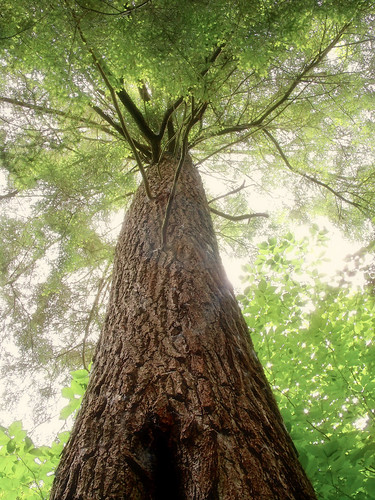
The growth of a tree takes time.
Photo by: Nicholas_T, courtesy of Flickr

If you know about my husband's gallbladder surgery, you'll know a bit of what I mean. I am a wife, mother, a grandmother (my two grandchildren live with me) a church goer (I have a job there, too) and I sometimes wonder how I ever made time for writing.

No matter what anyone else tells you, if you love writing, you'll make time for it. Your writing won't sit on the back burner 24/7 and you'll make time for writing, editing, and publishing. You'll want to speak to others about the craft and take some classes.

And when you feel as if you can't do another thing, God will give you a break. It may mean that you get sick, or your husband gets sick, or you are so overwhelmed that you spend the day watching television or getting a pedicure.


Photo by: cstrom, courtesy of Flickr
But if you don't take some quiet time for yourself, be assured the time for thoughtful reflection will occur one way or another.

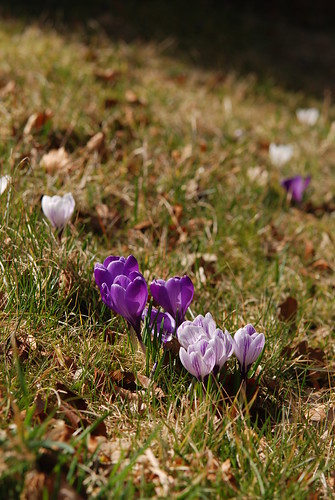
No boredom here. No wondering what to do with yourself. Because something is always provided. Something to keep you growing, like those little plants outside peeking out from the once frozen earth.

I love it.

Tuesday, January 29, 2013

Speaking Your Mind in Writing

Especially if you're writing non-fiction, speaking your mind appears to be a general rule. You're writing your truth after all, and you have some you'd like to share.

Photo by: Balaji.B, courtesy of Flickr
Unfortunately, sharing your mind in writing can be like talking to a friend and instead of listening, telling her what to do. Self-help books fall into this category, but even with a self-help book there are moments for breathers if you will, moments for the reader to seek out some reflection. The best self-help books don't merely speak their minds through you, they offer ways for the reader to take a look at their own pace.

When you speak your mind in book form, it shouldn't be spoon feeding, (making sure your reader knows everything you know) in fact, a few ideas are better; and with these ideas folks can decide what works for them and what doesn't.

Stepping back a little is a good way to see if your writing is ready for the public. After giving your first draft a few weeks of sitting alone, read it again. Pretend as if this friend is speaking to you for the first time and sharing her ideas.
Photo by oddharmonic, courtesy of Flickr
  • Take a look at how you feel. Do you feel guilty? Do you feel happy about what you're reading? Granted, there might be a very good reason you're feeling guilty, but at the same time there should be room in your non-fiction book for understanding and room for growth.
  • Do you stop often in your book to reflect on what you've just read, or do you feel as if you don't need to think at all? Is everything handed to you on a platter?
My book, "Conquering Your Goliaths: A Parable of the Five Stones," had a little bit of everything that I've mentioned. Is it a perfect read? Nope. But there are some things I'd like to mention.

Some said the book was too simple.

Others said that the book was so deep that they took notes in the margins.

A few stopped reading at chapter 2. They couldn't read on because the book sounded too much like them and their struggles with Trust. They picked up the book later, after they'd had some time to think about it.

Others read the book through in one or two days, saying they couldn't put it down.

Some have read it twice. First as merely a novel with a story, the second as a story with opportunities to learn new things and take notes.

Often, in non-fiction, where the person is currently standing in their personal life, reflects the comments they give you. And that's okay too.

In speaking your mind you still need to be honest with the truth as you see it.

Thursday, November 29, 2012

Last One is a Rotten Egg

You probably remember the saying as a kid.

And you probably never wanted to be last, especially when it meant you could be first, or at least second, and lose the rotten egg title. Last meant you were somehow not on the list or that your parents really did find you on the doorstep in a basket.


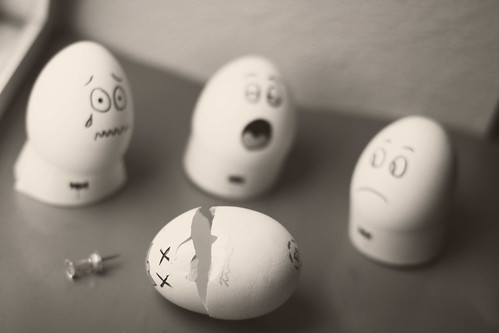
Photo by: oxcnpxo, courtesy of Flickr
But let's get serious.

We often take this saying into our adulthood. It's almost as if we have to prove ourselves to ourselves, to our parents, or maybe even our siblings.

I'm not that rotten egg; I'm never going to be last. And so we push ahead, faster than we really have strength, and give little or no time for that reflection we really need.

The other day I was talking to a friend about reflection but was calling it writing in a journal. She said, "But I'm not a writer." I couldn't convince her that a person didn't need to be a writer to write in a journal and that it would be helpful for posterity to read a little about her after she was gone. I explained how it just wasn't enough for me to know someones name, who they married, and when they died, I wanted to know about their life.

But my friend wasn't too interested. My friend didn't want to keep a journal, at least not now. And it would have been fruitless to keep prodding her on to think differently about it. Perhaps she thought it was too much work, maybe there were other things on her mind that she felt took precedence. What I know is that she wasn't a rotten egg in my eyes just because journaling appeared to come last in her life.

A month or so ago I placed my novels on the back burner until after the holidays. It just didn't make sense for me to write when I could be thinking and doing other things. Perhaps you might think I'm a rotten egg. Letting my writing go like that.

But I hope not.

Monday, October 22, 2012

Taking Writing Breaks

A Writer on a mission is a bit like a man who has a hard time slowing down for his wife at the supermarket, or a wife who has a difficult time not picking up after everyone. You may personally find that when you're on your greatest and most focused missions, you're unaware of walking too fast or cleaning up too quickly.

I often have family tell me that it's time to slow down a bit. I need to make time for the most important things, which includes writing, but it's frankly not at the top of my list although I'm often making it so.

At times when my legs get ahead of me or when I find that I'm working on my latest writing project when I might be spending some time with my grandchildren, I'm happy when I'm made aware enough to stop.


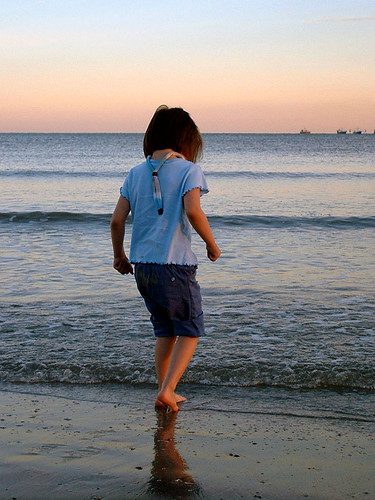
Photo by: Dreamymo, courtesy of Flickr
I write the best when I've given myself some time for reflection, when I've spent some time playing or reading or taking a walk.

A writer on the best mission is one who thrives in balance, but since we're all working on that one, perhaps the best thing that we can do is to keep on trying.

If your friend tells you that she wants to get together for lunch but you're to busy to stop and take a couple of hours, perhaps you need to rethink your mission.

If your husband suggests a 'date night' but you say you're too busy finishing your novel...

If you find that you're stuck, or angry or frustrated, you just might want to take a break before going back to your writing.

It works.