Showing posts with label book endings. Show all posts

Thursday, May 30, 2013

Book Endings

Today I'm thinking about endings and new beginnings, but this is because I'm closing on a new house. Still, it shouldn't be surprising to you how important endings are, not only in your personal life but when it comes to writing a short story or book.

Have you ever watched a movie that didn't end 'right'? Did you wonder if you'd wasted your time?

Did the movie give you pause? Were you trying to fix it in your mind?

Have you ever read a book that didn't end 'right'?

I'm not saying that a book needs to end in complete happiness, or that the ending should be obvious, I'm talking about an ending that feels right in the gut. It might be a complete surprise to you, it might even be a bit of a depressing ending, but the ending is as it should be. And you feel it.

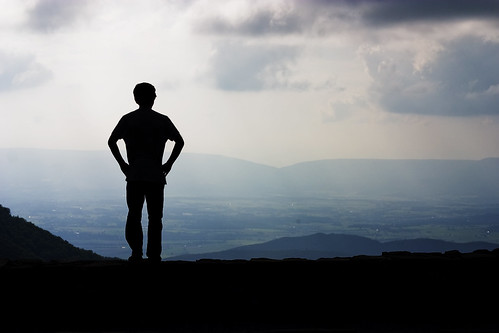
This book had a completely different ending from my first or second choice,
but it was the right ending for the book

Especially if you're writing a sequel, the ending needs to be 'right.' It needs to give enough closure to the book, and enough unfinished story to get you to the next book.

If your book is a stand alone, you need to be awfully sure that the ending is the 'right' one.

How do you do that?

I usually have a list of possible endings before I begin my book's journey, but I try not to get set on the ending until much later. Why? Often, the main character will tell me through the story that the ending isn't what I first imagined. Yes, I will hear it from the main character. It won't necessarily be words spoken, but I will get a gut feeling that the answer is 'this' one, and not the option I first figured on.

Book beginnings, like book endings, will make or break your book. If the beginning isn't right, no one will read past the first page; if the ending isn't right, you may have a bit of a struggle getting readers to pick up a second book you've written.

Friday, March 16, 2012

Simple Outlines Create Success

You've heard of those (far out) outlines and profiles; those that specify hair color, eye color, habits, and speak about the details within each chapter, etc. But what I want to talk to you about today is putting together a simple outline--one that will get you writing instead of researching.

While I think it's important to research a story, I know that it is also easy to get stuck in the planning stage forever. That's why I like to use a simpler outline method.

Photo by Ed Yourdon, courtesy of Flickr
It goes something like this:

Character

Start by thinking of your main character and the traits and physical characteristics that apply to them. Get a fairly good idea of who they are by keeping your thoughts to one paragraph.

Setting

Now, take this character through a setting. Where would this character typically live based on their traits and physical characteristics? Focus on the main setting; where the primary character usually frequents.

Plot 

What is your main character's problem? What issue are they trying to solve?

When it comes to plot, you'll not want to make it easy for the character to succeed. Based on who they are and where they live, and their specific problem, you'll want to take the main character through some trials. In a book of say, 200 pages or more, expect the main character to go through at least five episodes that they must overcome to face the next obstacle. If everything is smooth sailing through your book, you don't have a story, and you don't have a life. Think about your own life. Is it free of challenges?

How does your main character try to solve their problems? After listing the five challenges that must be overcome, list their accompanying solutions; solutions, by the way, that don't necessarily work, but lead the main character forward.

Ending

How is the problem finally solved? Is the answer realistic based on the trials that the character has already overcome? Endings are just as important as beginnings, probably even more so. Have you ever read a book and the ending seemed forced? Did you hate the ending because it didn't appear realistic? The right ending is important for your book, and based on the trials overcome, you should be able to place the main character in the right ending.

When it comes to outlining a book, we all have our ways of getting the information down. Some writers I know use magazine pictures for all the main characters of their book; others use a poster board for all of the chapters and scenes of the book. On the board they can move (with sticky notes) what is going to happen in each chapter. If they decide on something else later, they just move the sticky notes.

But I happen to favor this method. It's simple and to the point. Plus, you're not spending hours and hours organizing (maybe even getting burned out) before you write that first line.


Thursday, February 9, 2012

Cliff Hangers

We've all heard of cliffs and hangers but what of cliff hangers?

Photo by Magnus Brath, courtesy of Flickr
Cliff hangers are those chapter endings that create in the reader a desire to read on. Without them, they may set aside our book for a day, a week, maybe even longer.

The best writers I know keep their readers engaged, keep them reading. And this isn't just true for the sorts of books that demand cliff hangers such as mystery and suspense novels. We're talking about keeping our readers interested because of the question we've asked at the end of a chapter, that secret not yet revealed, the way we spin our yarn to keep our reader wondering if they've guessed right--Mr. Randolph really is the the 'stranger' who has changed his name and appearance and appears in town as a new member of the community...

With the busyness of people these days, even the best readers don't have time for books that don't somehow spur them on to the next chapter. There are too many other things to do.

What of cliff hangers at the end of the book?

I have even known writers who have had cliff hangers at the end of their books to spur the reader on to the next book. Series books keeps your readers with you all through the journeys--just think of Harry Potter. Do we want to miss anything Harry does? Anything he says? Any person, human or not, that he must face?

Photo by: JSmith Photo, courtesy of Flickr
Of course not, and the best series books keep the reader with them for years to come.

Are you working on a book now? Now sure where to end the chapter? Take your reader up to a cliff and leave them there, at least until the next chapter.