Showing posts with label Characters. Show all posts

Wednesday, January 17, 2018

What would you like to see on my blog?

Hi!

I have a few minutes this morning and wanted to write you a little note. I have been thinking about what changes to make on my blog this year and wanted to get your advice.

I do have some time limitations, but I've decided to post at least once a week on a subject you find interesting. This week the day is Wednesday :)

Here are some thoughts:

I have some short stories I have written that I could share. I could also do some character interviews with the characters in my books. Do any of you draw? I would love to see how you envision one or more of my characters. If I get some of these, I would gladly post them here. 

I do a lot of writing, so I could also occasionally post some deleted scenes that didn't quite make it into the last revision of a particular book.

Any other ideas?

I would be happy to hear them.


Kathryn

Thursday, July 27, 2017

THOUGHTFUL THURSDAY: Plot


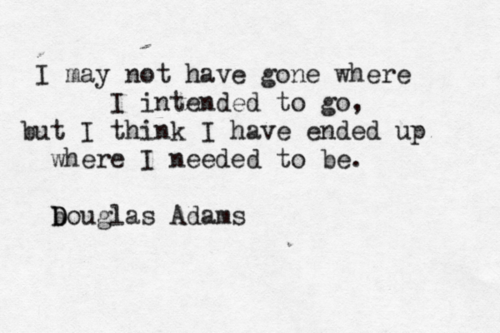
Do your characters speak to you? 

Are you traveling a different road with them than you intended? 

Is the direction you are traveling, and the end result achieved, better than you had originally imagined?


Image result for WRITING thoughts

Monday, June 26, 2017

KEEPING IT REAL: Reality in Writing

Years ago, I watched soap operas like they were going out of style. And I loved them. Everyone had such exciting lives, often, I found that my life was dull in comparison.

It wasn't until later, when the love for soaps dropped out of the picture, that I realized how 'unreal' they actually were, and that, thank heavens, my life wasn't filled with all of that pain - and on a daily basis!

Image result for dialogue
https://www.tes.com/lessons/aUnoFPhKIgHYMg/dialogue
Reality in writing is important, yes, even if you're writing science fiction or fantasy. Maybe espeically then. You reader needs to connect, not only to your characters, but the place they have planted themselves. And your reader can't do that if they are thinking, "well, she just wouldn't say that," or "he wouldn't do that." "That place is just too far-out in space to be believed." "What about science?"

The wrong dialogue can also cause book problems. Even though characters are fiction, they're a lot like real people, and should have some of the same expressions. Make sure that what your characters say not only reflects the time period in which they are living, but the personality you have given them. Make sure that their fears are in check; that your reader doesn't become mystified because your main character is suddenly sounding like your secondary character.

A good excercise; one that I should implement more often, is to write out my dialogue without the tags (i.e., he said she said) and see if another reader can tell who's speaking without the tags. In writing, you need some tags, but they don't need to be after every piece of dialogue. Too many tags will actually slow down the scene. 

No writer is perfect, and I'm still dealing with reality in my own writing, so don't give up if this is a struggle for you. Listen to those critiques, listen at parks, malls, grocery stores. Take notes on how people speak.

It will be the most helpful homework you've ever experienced.

Thursday, January 14, 2016

When You Don't Want to Make Lemonade Out of Lemons

Life often gives us lemons in which we can choose to make lemonade out of - or not.

Of course, we can choose to make lemonade for ourselves, but we can't always choose lemonade for others. They may want to live in the 'lemon' space, at least for a time. They may choose not to make lemonade now or ever, especially in the ways we think they should.

When it comes to creating book characters, it's sometimes preferable not to make lemonade, at least for awhile. Sure, you may want to save your character from the mess they've or someone else has created for them, but that doesn't mean you should.

Sometimes lemons, just plain lemons, is the place to be with your main character. They must learn something in this story. They must have pain, indecision, a bundle of nervous episodes if necessary. They must work hard for what they want.

In time, and as the lemon is mixed with water and sugar for lemonade, you find that your main character has worked through his/her problems and has become a better person. Not because you saved her early on, but because you allowed her to move through the trials of life.

This is tough. We learn to love our characters as if they're our best friends. But the best thing we can do in a story to provide the greatest interest, is to put our characters in situations that they can't help but blunder at first. Only then, when the last few pages are unrolling, can we see why they went through what they did, and how much they, and we, have grown because of it.

Kathryn

Thursday, April 16, 2015

SNOW? What it has to do with your writing

Have you ever written something that didn't quite - fit?

Is your main character expressing herself in ways she shouldn't? Do you have a particular scene that seems dropped in by some romance author even though your book is science fiction?

I've had this happen and it's a little like the snow we're having in April.


Yes, it snowed yesterday, heavily. My grandchildren were even able to build a fort with it. And although they were enjoying it (I was trying to) I just couldn't get past the fact that it was April and it was snowing like it should have snowed in January.

And I couldn't help it. I thought about writing and all of the times I've had to do a little bit of weeding under the snow.

And it's hard, let me tell you.

But I've learned something important about taking care of it as soon as I see it.

The longer the snow sits, the harder it is to get to the weeds.

If you're finding it hard to weed out that chapter or that line or that scene that doesn't quite 'fit' into your story, think about it this way. You can save it for later. Maybe later you can use it in another book. But even if you don't, the shoveling is still important.

I promise.

Kathryn

Wednesday, October 15, 2014

5 Ways to Make Your Characters Real


Making your characters real is really not much of a mystery, even if you're writing one.

Still, there are things that a writer must remember when placing their main, secondary, and antagonist characters on the page. Here they are in no particular order:

1. Every character needs flaws, especially your main character who must change and grow through the story.

2. Every character must have some redeeming qualities; yes, even the antagonist. Perhaps the antagonist lies through her teeth on every account, but keeps a beautifully kept yard or has an eye for formal wear.

3. Every character needs to have characteristics specific to who they are. These characteristics may be body mannerisms, dress style, the way he drives his car or the way she avoids speaking in public.

4. Every character needs to stay in character. If it helps for you to make a list, do it. If it helps you to remember hair color, eye color, or what your main character's name is, write it down or use a picture from a magazine to keep you on task.

5. Every character needs to be as real as your next door neighbor. That means you may know more about your main character than you will use in your book. But you will know the insides and outs of your main character in case something comes up and you need to know her favorite type of music, for example.

I tend to mix up character names in my books, so it's a good idea for me to write them down and have them handy. You may forget the particular flaws given to a particular character or the redeeming qualities, or even the particular body mannerisms your protagonist has.

If so, make a list and have that list handy.


You won't regret it.

Monday, April 28, 2014

Snow? Sleet? Rain? Consistency in Writing


Do you go back and cut
what doesn't work?

I just looked out my office window. Looks like snow, or at least, snow mixed with rain.

Man.

I was looking forward to working in the yard.

Hey!

It just stopped!

No kidding!

So funny.

I guess it's spring. One moment it's warm, the next the sky is pretending it's going to return to winter. And in the next second, we're back to spring again.

I love spring. But I also like consistency. The sort of consistency I hope to portray in the books I write. I don't want readers to be too clueless; especially at the end of the book where I hope to resolve most, if not all of the issues.

I don't want my readers putting down my book and saying to themselves, "Well it looked like a good one, but the ending was entirely wrong."

Kind of like a cooler than average spring day turned winter.

Think about your own work. Is your ending satisfying to the reader? It may be satisfying to you, but you may not know how others perceive it, or your characters perhaps, or the setting you have chosen, unless you get into the heart and soul of the matter and ask your readers (before your book is published, of course) following suit with those significant changes.

That means research. It means getting into the heads and hearts of your characters. It's about feeling as they would feel and doing as they would do as you write about them. It's making every scene three dimensional, like a movie, like the best play you've ever set your eyes on.

Here's to your best work!

Kathryn

Friday, September 20, 2013

Say What?

What you say in your writing reflects not only the character's thoughts but the tone of your book. And since I am having one of those "say what?" mornings in my personal life I thought I'd tackle the subject of tone.

Tone is more than the words you use. It's the speed with which they come across the paper. It's the way in which you express them.


Photo by: paloetic, courtesy of Flickr

For example, you could say:

"He was a jerk. A real loser. It was like he lived inside a bubble or something."

"Tom was self-centered. Sometimes, well, quite often actually, he'd be so fired up about his own life that he couldn't see past it to anyone else's."

"She didn't think Tom knew what to do. He must have had a million things on one itty bitty plate. It was almost as if it was hard for him to put one foot in front of the other."

In the first instance, I hope you feel the anger from the person looking in on Tom.

In the second example, there is a bit more opening up from the person watching.

In the third example, we are looking directly at Tom, and for the first time may finally see why he appears self-centered and a jerk.

Check your tone. Does it reflect the scene? Does it reflect the character? Does it reflect how others see the character, or is the tone too harsh or too soft?

I have a scene in my latest book that may strike some readers as over the top, and perhaps a little harsh. The main character, after trying to make something work, gets angry, so angry she destroys personal property. But I think it works. You can't be afraid for your main character to fly off the handle just because you feel as if a 40 year old wouldn't do that. You can't be afraid to express it when it needs to be expressed. When the anger needs to come out, there should be little holding back, especially if the character really needs to get it out. 

And only you know when that needs to happen.

Read your work out loud if you have to. Get someone else to read it. Make sure the tone fits the scene as well as the character within the scene.


Tuesday, June 4, 2013

Getting Lost: Why it's Important in Writing Your Novel

I don't like getting lost. When I'm driving to a new place I print out a Google map. My husband is showing me how to actually use my Smartphone so that I can plug in destinations and get to places without getting lost.

Yes, I get lost. And not only when I'm driving.

Photo by: grant_loy, courtesy of Flickr
I get lost when I'm reading and sometimes, I can get lost in my writing.

It isn't always easy to keep to the path that you've created for your characters, because sometimes, quite frankly, they like to get off the beaten path.

For the most part I let them. Okay, for "all parts" I let them.

Getting lost is important in a story. Not so far off that you can't find your way back to the main road, but far enough off the beaten path to lend interest and continued reading.

I have had characters who have told me, "You're making my life too easy. I like it, but will the reader?"

I've had nudges: "Don't you think that he should die? I mean, he's great and everything, but he should die. Your main character needs to struggle with death and overcome it."

Photo by: Fugue, courtesy of Flickr
I've had whispers. "Really, I would actually say that? I would actually do that?"

Getting lost is as important as getting found, perhaps more so. Because in the getting lost much is learned about a character's strengths and weaknesses, about his/her determination to work through problems and overcome.

Much like we do.


Thursday, March 28, 2013

How I Write My Books

Often the question is asked, "So how do you write a book? There are so many chapters and so much writing to do, how do you ever get it finished?"

Other questions are usually, "How do you get your ideas," or "How do you keep the story going until the very end?"

Questions like these are valid, but often, they get in the way of sitting down and writing your own book.

When I write a book I do a little research. I don't spend days and days on it, because I've learned that I quickly burn out. After a bit of research I get going on my book. Sure, research will then occur during the process of writing, and I make time for it when the occasion comes up, but I don't make my book about the research, I make the focus about the story.

I usually make a goal of a chapter a week. That way, I have a direction to travel. And I try not to think too far ahead, I just take each chapter as it comes.

Ideas come to me in the least likely of places, and sometimes, even from those in my family who have a great idea for my next book. A River of Stones came after I'd been writing the fictional story of a girl named Samantha whose parents were divorcing. Like my personal story, Samantha was confused. She wanted to know if she'd caused the divorce; she wanted to know why her parents didn't love each other any more.

One day, I was watching the Oprah Winfrey show, and someone was talking about a book called, Stones in the River, or something like that. And the idea came for the title.

For Conquering Your Goliaths: A Parable of the Five Stones, my husband read an email and told me about it. "You know, a story about the five stones that David gathered to defeat Goliath would make a great book."

 
The rest is history.

One way to keep your story going to the very end is to plan out the chapters ahead of time, but since I'm not one to follow what I've written down, I prefer the seat of your pants method. I have an idea of the beginning, an idea of the ending, and some idea of what's going to happen in the middle, but I try to be open to the characters and listen to what they want. And I need to tell you I've never been disappointed.

In the long run, a book must have a good plot and plenty of tension; that's the page turner stuff. And then the character's have to be great, not flat-cardboard varieties, but full blooded real individuals.

How I write books may be different from the way you write books, but the important thing is that we write them, and keep writing them until the end of time.


Friday, March 1, 2013

Do Your Characters Take Over Your Book?

No?

Let them.

I mean it. Say you have a great outline, and the story is moving along steadily as you outlined it, when all of a sudden your character says to you:

"Wait, I don't want to do that! I wouldn't do that!"

Or

Photo by: Jagz Mario, courtesy of Flickr
They simply stop speaking and turn down another lane.

I don't know about you but I like it when my characters take over. They know themselves better than I do anyway, and if something in their story isn't feeling right to them, I like it that they have the confidence to do something else.

I'm glad I no longer hang onto them with a short rope.

There's something amazing and good that happens when your characters take over. It's kind of like inspiration and dictation all at the same time. And I'd like to think that my story will be better for it.

  • So, you have a great ending, but your characters don't like it. Change it.
  • You're midway through your book and your main character says, "I shouldn't be doing that yet, I've got these other mountains to climb first," or something under those lines. Slow down.
  • Your stumped, you're stuck. Listen.
I promise you, it will be worth it.

Tuesday, November 27, 2012

When Your Characters Speak to You

I used to think I was a bit crazy.

I'd be working on my short story, my novel, when all of a sudden the character would start telling me stuff.

"I wouldn't say that."
 
"Don't put me in that situation yet."

Photo by Matthew Kenwrick, courtesy of Flickr
"Here's the real story."

And I would stop and listen to what they had to say and write it down.

Now, you may think listening to your character as if he or she is a real person is a bit off the beaten track, but if you're a writer you may have already discovered that when your characters start speaking to you, that's when you really have something.

Photo by Paul Stevenson, courtesy of Flickr
Being in tune to who your characters are and what they want in life, for good or evil, will keep the honesty your want in your work. When your readers read what you have written your words will not only make sense to them, they will consider your characters 'real.'


Photo by Matthew Kenwrick, courtesy of Flickr
Not some paper copy form, but a 3-dimensional being with his or her own thoughts, feelings, wants, needs and direction. Whether you like your characters choices or not, revealing who they are (rather than protecting them because you don't like what they are choosing) will create an opportunity for you as well as your readers to really learn something.
In real life, as in the real life you want to create for your characters, life is made for learning and growth. Do you have to experience all of it personally yourself--especially the dark side--to understand what works and what doesn't?

Nope.

All you need to do is listen in and write it down.

Kathryn

Tuesday, October 30, 2012

Come and Stay Awhile: The Importance of Setting

I don't know about you, but setting is harder for me to tackle in a novel, especially if I haven't been to the place I'm writing about. And even if I have, there's still that stuff I need to check out.

I have been on a cruise, but I didn't know what happened behind the scenes. I didn't know what the captain's quarters looked like or where the food was stored. I had questions about crew cabins, jobs on a cruise ship, and what happens when someone dies on board.

Yes, this means I did some research for my book, Sunny Side-Up, though I could draw on my experience as a passenger to complete the setting.

Setting is a valuable asset to your book or short story, because with setting you get a feeling for where the characters are standing and participating. You aren't in some void, rather, the setting contributes to the characters in the book and vice versa.

Photo by: CJ Isherwood, courtesy of Flickr
San Francisco
Photo by: Dougtone, courtesy of Flicker
New Jersey
In my first mystery, Scrambled, the people living in the Hotel Camaro reflected the condition of the hotel itself, which was badly in need of renovation. And since I'd never stepped foot in an old east coast hotel, I had to do some studying to make the setting right. I couldn't just use what I remembered about San Francisco to make it right, for example.

Setting isn't just about tree placement, or having a garden or making the sky blue, the setting reflects the story in a very real way and contributes to your character's success.

You want your reader to put of their feet and stay awhile. But you don't want them to get too comfortable. That's why there's tension and conflict to balance out the beautiful trees and meandering stream. That's why the old hotel with loosening bathroom fixtures, still has room to show it's beautiful wooden cornices.

Though a huge dose of setting at any given time is usually skipped over by the reader, a sprinkling of it in between dialogue lends depth and interest to your story. Are people talking all of the time? Even in real life there is time for reflection and quietness. And that's what you want in your story.

You want your reader to see the world that the character lives in. You want your reader to know why they live where they do, and how the world in which they live contributes to their happiness or lack of it.

If you can do this, your readers will want to prop up their feet and stay awhile.

Wednesday, October 17, 2012

Creating Realistic Characters

When writers ask me what it takes to create realistic characters, my first thought is always,"you probably already know the answer."


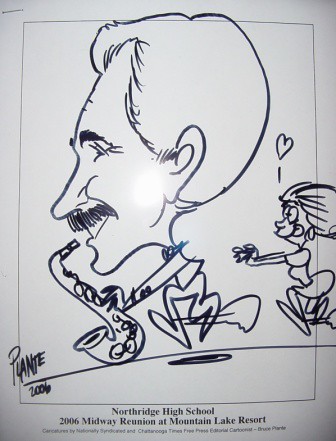
Photo by: Northridge Alumni Bear Facts, courtesy of Flickr
If you've spent your life out of doors and not inside a cardboard box, if you know a little bit about communication and the quirks that everyone has, if you know how to relate to children or teens or adults, then you already know how to create realistic characters.

For some reason, in writing a book, authors think they have to know something special about keeping their characters from the cut-out variety. But all a writer really needs to create a believable character is just a reminder of what folks are all about in the first place:

  • Physical characteristics
  • Emotional ways of being
  • Spiritual attributes
  • Talents and gifts
  • Flaws
What is it about your best friend that keeps her your best friend?

What is it about you enemy that keeps her standing far away?

Why do some people prefer jeans to dressing up?

Why do others hate to be bothered, while yet others like that one-on-one visit?

Creating realistic characters is a bit like life. You meet new people, you're surrounded by loved ones, and your enemies continue to stress you out, because that's what they do.

What you learn in your life associations will keep your characters realistic.

Saturday, June 9, 2012

5 Secrets to Beginning a New Novel

Since I am in the process of beginning a new novel, I wanted to let you in on a few secrets I have discovered through the years when it comes to writing a great book.

Here they are:

Know the Basics of Plot

1. Before you start, know who the main and secondary characters will be, the setting and a pretty good idea of the plot. Remember, I said a PRETTY GOOD idea. Something happens to me when I write; suddenly, the characters take over and the plot changes, and in fact, becomes better. Leave yourself open to change as you write.

Research
Photo by Paul B, courtesy of Flickr

2. Get a bit of research done. I am TERRIBLE at this one and so what happens is that I'm writing about a cruise ship that is about to dock in Hawaii. Here are a few things I needed to know right away because a murder had been committed on board. How does the Honolulu Police Department function? What do their uniforms look like? How large is a typical department? What about lawyers? How do they dress? How do they perform? What of cruise ship negligence? What's a famous recipe in Hawaii that has eggs in it? And the list goes on...Once this information is at your fingertips you can write without having to stop mid-sentence to figure something out.  

Action!


3. Keep in mind that your reader wants to be involved right away. I first began my story with some reflection on why Susan (my main character) was taking this cruise, but quickly discovered that the better beginning would involve the reader in some action-- and so a murder was created.

Move forward

4. Try not to correct as you go unless you realize early on that you've bungled the beginning like I did. Keep writing and try not to go back on what you've written until at least the next day, and then only go back a page or two to refresh your mind.


Photo by J. Chris Vaughan, courtesy of Flickr
Take a break

5. If the muse quits on you, take a break, and then go back to your work. Your writing will be better. I like to take 15 minute breaks or use the time to do a writing exercise unrelated to the book I am working on.

When it comes to the beginning of your book, you not only need to make it captivating but realistic. Keeping your facts straight will lend credibility with your readers and moving forward and taking the breaks when you need them will get that book finished before you know it.


Wednesday, May 16, 2012

10 Clues that You're a Writer

How do you know when you're a writer?

1. You may stay home to write instead of going out to dinner. Besides, you're on your last chapter!

2. You begin to see your characters as real people and may converse with them on a daily basis. You may even prefer them to the real people you know.

3. You notice the little things that most folks take for granted. The sway of the leaves. The smell of the newly budded flower, the look of a child's face as they gaze upon the splendid treasures within the Disney Store. Heck, you may even be in awe yourself.

Photo by: tnarik, courtesy of Flickr
4. You stay up too late or get up at the crack of dawn. This is the only time you have to write and you're going to make the best of it.

5. You hate it when others miss-spell things (Hummm, is that right?), but may be a bit uncomfortable when others notice that you have.

6. You carry a book with you at all times. It may be your book (to sell or give away to just the right person) or you carry a book written by someone else to read at your earliest convenience.

7.  You hate it when others don't think your job is anything more than a "hobby". You want to be respected for what you do.

Photo by: Sean MacEntee, courtesy of Flickr
8. You spend a good portion of the day dreaming up new characters for your next book, or dreaming of a new place for your next book's setting. You may even book a flight.

9. You may procrastinate because life always throws you things that at first glance appear to be more important than your writing.

10. You eat junk food at the computer because you don't want to lose your train of thought.

Have a favorite, or one I haven't thought of? I would love your feedback! (Now you know what I do! Well, except for #4).

Friday, March 16, 2012

Simple Outlines Create Success

You've heard of those (far out) outlines and profiles; those that specify hair color, eye color, habits, and speak about the details within each chapter, etc. But what I want to talk to you about today is putting together a simple outline--one that will get you writing instead of researching.

While I think it's important to research a story, I know that it is also easy to get stuck in the planning stage forever. That's why I like to use a simpler outline method.

Photo by Ed Yourdon, courtesy of Flickr
It goes something like this:

Character

Start by thinking of your main character and the traits and physical characteristics that apply to them. Get a fairly good idea of who they are by keeping your thoughts to one paragraph.

Setting

Now, take this character through a setting. Where would this character typically live based on their traits and physical characteristics? Focus on the main setting; where the primary character usually frequents.

Plot 

What is your main character's problem? What issue are they trying to solve?

When it comes to plot, you'll not want to make it easy for the character to succeed. Based on who they are and where they live, and their specific problem, you'll want to take the main character through some trials. In a book of say, 200 pages or more, expect the main character to go through at least five episodes that they must overcome to face the next obstacle. If everything is smooth sailing through your book, you don't have a story, and you don't have a life. Think about your own life. Is it free of challenges?

How does your main character try to solve their problems? After listing the five challenges that must be overcome, list their accompanying solutions; solutions, by the way, that don't necessarily work, but lead the main character forward.

Ending

How is the problem finally solved? Is the answer realistic based on the trials that the character has already overcome? Endings are just as important as beginnings, probably even more so. Have you ever read a book and the ending seemed forced? Did you hate the ending because it didn't appear realistic? The right ending is important for your book, and based on the trials overcome, you should be able to place the main character in the right ending.

When it comes to outlining a book, we all have our ways of getting the information down. Some writers I know use magazine pictures for all the main characters of their book; others use a poster board for all of the chapters and scenes of the book. On the board they can move (with sticky notes) what is going to happen in each chapter. If they decide on something else later, they just move the sticky notes.

But I happen to favor this method. It's simple and to the point. Plus, you're not spending hours and hours organizing (maybe even getting burned out) before you write that first line.


Monday, February 13, 2012

To The Romance Writer

Since we're only a day away from Valentine's, I thought it would be nice to focus on romance writing. Let me say up front that I'm not a fan of most romance novels; those that really get me are the ones that shy away from the typical knight in shining armor routine, have characters that are as unique as the book and a setting that is natural and not over-used.  Let me explain what I mean:

Photo by: CarbonNYC, courtesy of Flickr
  • If the good guy is always saving the day at the end, you haven't got me. If the woman is weak, you haven't got me. A better plot would be one where the woman is strong and can handle her life with or without the man. Don't get me wrong, I'm all for marriage and all that, I just think that the end of a story, especially the end of a romance, needs to take the reader off the beaten path, which brings me to my next concern.
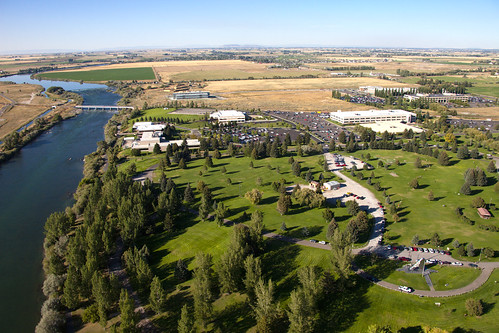
  • Idaho Falls Campus, Idaho National Laboratory, courtesy of Flickr 
  • Setting. Overused are those settings that we always think of when it comes to romance. Paris. Italy. The Hawaiian Islands. Cancun. What if the romance occurred in an out-of-the-way place like Idaho or West Virginia? 
  • Photo by Cwasteson, courtesy of Flickr
  • Characters. When it comes to romance characters, quite honestly many of them are above human. Just substitute a different name and you have the same broad chested man that was in the last book. Please understand; I think romance characters need to be nice looking; we might not read a romance with a pot-bellied man as a main character, but consider this: many of us our dealing with men and women in real life that are not so perfect.
Okay, perhaps that's why you read romance, to escape. Maybe you write it to do the same, but it would just be refreshing if I could pick up a romance book and be pleasantly surprised. There is room in life for that, too.

I would love to read a romance like the movie, "You've Got Mail," except I'd have the main character keep her book store in the end, and I would expect the man in the story to want her to.

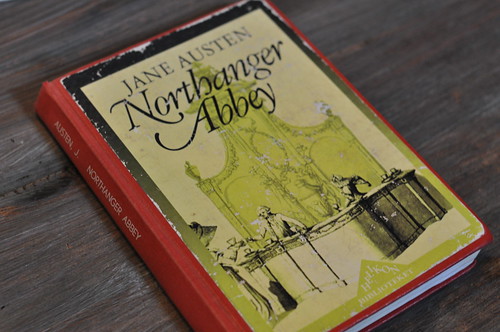
Take a look at the Jane Austen books. Sure, they have good looking men, but the main character doesn't always marry the best looking man, because, in the end, he isn't the best man for her. She may struggle with marriage, she may not even want to get married. In the end, she may find that she prefers the single life.

And can I say a bit about sex? Remember the movie, "Somewhere in Time?" Remember that tasteful bedroom scene? Remember how beautiful the scene was because of the lack of other things? Why can't a romance be more like that? Why do some romance books have to be so explicit?

Okay, I've said my peace.


Friday, February 3, 2012

Editing your Book

I like to think of editing like using a shaping tool.

Don't get me wrong, I have no idea what this shaping tool would be called, but I do know the difference between a straight piece of wood and an elegantly shaped table leg.

Photo by: crows_wood, courtesy of Flickr
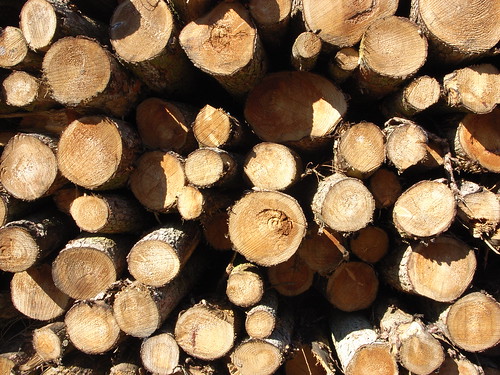
A piece of wood is the beginning of your work before you've even put pen to paper or keystrokes to computer. It's one of those things that you need to have first before you can really get to work. The idea can be shaped into anything you want: a toy, a table leg, even a shelf with pegs, but it will never be any of those things until you take the piece of wood to the next step.

Cutting away, whether through saw or blade isn't always the most easy task. After that first draft is written, what should a good writer let go of, what should they cut from their work? I look at the following things:

  1. Solid plot, characters and setting. Characters are the most important because they speak to readers in a way that plot and setting can't. I make sure that the characters, plot and setting are consistent in tone and look throughout the book.
  2. I look for holes in the manuscript. Stuff like a character that gets lost in the manuscript;those that I haven't written about for too many pages. 
  3. I may get a reader or two at this point, so that they can give me an overall opinion of the book and what they feel still needs some work.
After the first draft, I always go through a second one. These are some things that I look for:

  1. Extraneous words like and, the and but.  Sentences and paragraphs need to contribute to the book. Nothing is extraneous. 
  2. Extra "flowery" words that don't contribute to the overall feel of my work. 
  3. Photo by: TheLivingRoominKenmore, courtesy of Flickr
  4. Words that should be replaced for a better word, and words that make no sense. I just had this happen with my most recent edit. I used a word that was completely wrong for the sentence and had to re-work the sentence so that it would make sense. 
By the time I'm at my third draft, I'll need some great readers. I choose great readers as well as writers to go  over my work because a writer usually picks out something that a reader misses and vice-versa. My readers always read my book without compensation. This has been a real blessing to me. 

In the end, editing my book means shaving off all the unnecessary clutter, all of the stuff that means little and may even detract from the intent and direction of my book. And I like that just fine.

I'm looking for an elegantly shaped table leg. 


Saturday, January 28, 2012

What you Write is Usually What you Read

Good news!

What you write is usually what you read.

Why is that good news?

Think about it. If you enjoy writing fantasy, then you're usually reading fantasy. You learn about plot, setting, characterization and more by reading fantasy. You see the style of the writer, you learn what he/she does to  make a fantasy chapter work.

You also see what doesn't work.

Photo by Sarah Sphar, courtesy of Flickr
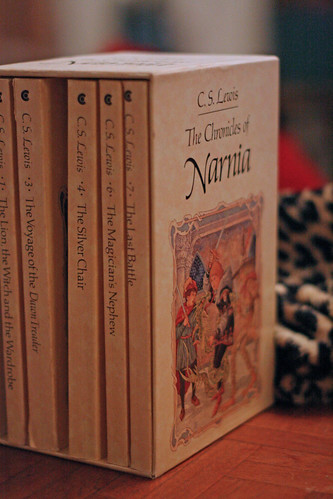
I have an awful time when I read a book with too many characters. And I guess this can happen in any book, but fantasy novels seem to grasp the concept of multiple characters fairly easily. Think of Harry Potter, The Lord of the Rings, The Chronicles of Narnia, and you'll see multiple characters. Though the authors handle the concept well, not every writer can, or should. But it's a good idea to read such authors because they give us a good example of how to make each character unique, how to scatter the characters throughout the novel so that the reader doesn't forget who a character is, even giving us a map or two so we can see the world in which all of  the character's live.

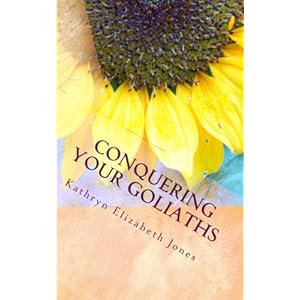
If you prefer books by C.S. Lewis in the non-fiction category, like I do, you may find yourself writing books like, "Conquering your Goliaths--A Parable of the Five Stones," like me; especially if you like C.S. Lewis' fiction too.
Conquering Your Goliaths: A Parable of the Five Stones
My new book, released Jan. 23, 2012

If you're not reading what you like to write, get on it! There really is a purpose in reading what you want to write; not all of it is necessarily--fun. Sometimes, when I'm reading an especially good book, I go back over paragraphing, vivid imagery used, and so on. I look for what the author does that I can incorporate into my own writing, using my own voice, of course.

Great lessons can be learned from the authors we love, and we need to take their words into consideration, not only for the pure enjoyment of the read, but for our own benefit--as an author.