Showing posts with label characterization. Show all posts

Thursday, January 14, 2016

When You Don't Want to Make Lemonade Out of Lemons

Life often gives us lemons in which we can choose to make lemonade out of - or not.

Of course, we can choose to make lemonade for ourselves, but we can't always choose lemonade for others. They may want to live in the 'lemon' space, at least for a time. They may choose not to make lemonade now or ever, especially in the ways we think they should.

When it comes to creating book characters, it's sometimes preferable not to make lemonade, at least for awhile. Sure, you may want to save your character from the mess they've or someone else has created for them, but that doesn't mean you should.

Sometimes lemons, just plain lemons, is the place to be with your main character. They must learn something in this story. They must have pain, indecision, a bundle of nervous episodes if necessary. They must work hard for what they want.

In time, and as the lemon is mixed with water and sugar for lemonade, you find that your main character has worked through his/her problems and has become a better person. Not because you saved her early on, but because you allowed her to move through the trials of life.

This is tough. We learn to love our characters as if they're our best friends. But the best thing we can do in a story to provide the greatest interest, is to put our characters in situations that they can't help but blunder at first. Only then, when the last few pages are unrolling, can we see why they went through what they did, and how much they, and we, have grown because of it.

Kathryn

Tuesday, July 1, 2014

Making the Most of What You've Got


See how you can use your writing
strengths to overcome your writing
weaknesses


I have always been able to tell a great story, but I wasn't always able to connect the dots on paper. So I practiced until the sentences flowed like water, and the connective tissue was hard to see. This also took time. I read other writers. I wrote. I tried to find my voice by writing what was from my heart more than what I found lurking inside my brain. And in time, through practice, my writing voice came.


Making the most of what you've got is using your gifts and talents in particular avenues of writing to help you along with those areas in which you lack. And you have to have some things you do well, or you wouldn't be a writer in the first place.
Make a list of your writing strengths

As writers we're constantly coming across stuff we wish we could do better. For me, some of the stuff I'm still working on is setting.

Setting for me is kind of like poetry. It's a place you go, beyond great dialogue and a terrific plot, to round out your story and make it believable. The last thing a writer wants is for the characters to be standing in some sort of void.

And yet, setting is where I struggle. After all of the writing and editing, I am always going back to add more setting to a scene, and even then, my books are never high in setting; I focus more on what I do best.

As a good writer should.

For example, maybe you're better at setting, and lack in dialogue.
Or maybe you can come up with a terrific plot, but have a hard time connecting chapters or paragraphs.

Whatever your dilemma, be assured that your writing strengths were given to you for a reason. To help you to write. But that's not all. They were given to help you to
overcome your writing weaknesses.


A case in point.

If I'd stopped in the beginning because my stories never sounded as good on paper as they sounded when spoken aloud, I'd never be where I am today. I used what I had: the telling of a great story and all of the imagination that came with it, and connected the gift with the weakness: writing it down on paper.

And I continue to grow my weaknesses through the use of my strengths as I'm sure you do, whether you know you are doing it--or not.

Wednesday, February 19, 2014

Drama in Writing


Though some might say that they're only writing this scene to get to the next "great" one, or putting in this character because they feel as if their main character needs a "friend," or even, that this dialogue is needed though it's not very "exciting," I'm a firm believer that every aspect, from setting to character must be filled with some sort of drama.

Do you realize that every piece of your story, every scene, even every character has to be, well....captivating?

A writer just can't afford for a sentence, any sentence, to just lie there--flat.

They can't afford to place in an equally dull setting and equally dry character.

It just doesn't make... 

...cents.

(There is no typo there).

Who would finish a book riddled with boringness?

Is that a word?

Anyway, they wouldn't. Of that I am sure.

Drama in writing is achieved not only by the way your sentences are constructed, but by the feeling you place within them. Are you using your five senses? Is your main character asking thoughtful questions of themselves after an especially grueling scene? Are your characters well-rounded; are they more than stick figures, meaning they have their own personalities and quirks?

Does every scene, and I mean every scene, count for something in your book? Does it need to be there? If your scene doesn't connect with the main theme of your book; if it's there because you think it's "cool," or because you just "like it," ditch it.

Please...

Do you ever put a book down because it's so long winded? Do you want to get to the next best part because the part you are reading is about as dry as a paper plate? What can you learn from books whose pacing, stinks?

Every book has something to teach us, so I recommend reading lots and lots of them. Writing is important, too. As we write and then edit, especially as we begin to read our work aloud, we catch things. Dull sentences. Boring surroundings, or even a lack of surroundings. Awkward transitions, and more.

The best drama out there, in life as in fiction, is captivating because of all of the emotions intertwined. Love. Hate. Secretiveness. Thoughtfulness. Pain. Action. Hope. 

I'm not giving up on you.

Kathryn 

Tuesday, August 27, 2013

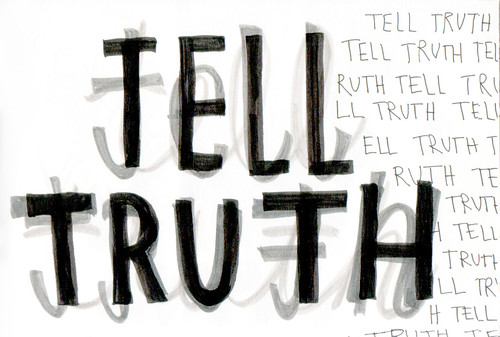
Telling the Truth in Writing

I don't know what it is about telling the truth; it's almost like we're afraid we'll hurt the other ones feelings if we do.

Photo by: arimoore, courtesy of Flickr
And maybe we will.

Because, when it comes to writing, I sometimes find myself doing the same thing for my main character. You know, protecting him or her from the ills of life. Instead of having her face the "giant" I have her finding out the truth early on and walking away from "him."

Telling the truth is important, and sometimes, even in real life it comes out bluntly.

You may have a character that is truthful to a "hurtful" fault, and you may have another that cannot see who they are and are always pretending to be someone they're not.  Both of these scenarios work in a book of truth telling; but a character that shy's away from danger just because you don't want him to "feel bad" is not the truth.

The truth is, you may not want your character to have to go through difficult stuff, and this will hurt your story.

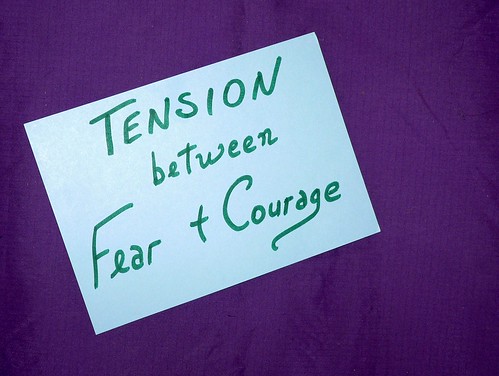
You need tension.

Photo by: Leonard John Matthews, courtesy of Flickr
You need trouble.
You need a character who struggles and overcomes.

And you can only do that as a writer if you tell your readers the truth.

Thursday, August 22, 2013

Don't Tell Me, I Have to Start Over?

I have been working with authors for some time now, and sometimes we learn through the process of editing and improving the manuscript, that the task is really that they need to start their short story over. A book is even worse, and it can be very painful considering all the time and effort put into it. 

But sometimes the task is necessary.

Sometimes, you have terrific characters, a nice setting, but the plot? Well, it sucks.

There is not enough intrigue, not enough tension, not enough (dare I say it) problems in the book to make the reader continue to read until the last page. Or you may have a lot going on in terms of problems, but the problems are all over the place and don't necessarily reflect the main struggle your primary character is going through.

Photo by: @Doug88888, courtesy of Flickr
For example, say your main character's parents are going through a divorce, but the problems your character faces don't specifically stem from the main problem. Perhaps the girl's focus is on friends and getting good grades at school, but she has no problem making friends and her grades are perfect. When a child faces the divorce of her parents, the loss affects every avenue of her life. She struggles to be liked, to prove herself worthy of a friend--any friend. (Who has enough self-esteem to be picky?) She makes mistakes directly related to the divorce, and finds herself searching for answers to fill in the loss of a missing parent.

Yes, I'm well aware that some books don't need that climb up the mountain (such as a memoir, for example) but most books need the intrigue. They need the tension.

Without it, you have nothing but beautiful words that lead the reader to the kitchen for a bite to eat.

Starting over isn't all bad. You have the characters in place. You have the setting. Now, create some problems for the character that continue to get worse (based on the main issue) before they get better.


Friday, March 1, 2013

Do Your Characters Take Over Your Book?

No?

Let them.

I mean it. Say you have a great outline, and the story is moving along steadily as you outlined it, when all of a sudden your character says to you:

"Wait, I don't want to do that! I wouldn't do that!"

Or

Photo by: Jagz Mario, courtesy of Flickr
They simply stop speaking and turn down another lane.

I don't know about you but I like it when my characters take over. They know themselves better than I do anyway, and if something in their story isn't feeling right to them, I like it that they have the confidence to do something else.

I'm glad I no longer hang onto them with a short rope.

There's something amazing and good that happens when your characters take over. It's kind of like inspiration and dictation all at the same time. And I'd like to think that my story will be better for it.

  • So, you have a great ending, but your characters don't like it. Change it.
  • You're midway through your book and your main character says, "I shouldn't be doing that yet, I've got these other mountains to climb first," or something under those lines. Slow down.
  • Your stumped, you're stuck. Listen.
I promise you, it will be worth it.

Tuesday, November 27, 2012

When Your Characters Speak to You

I used to think I was a bit crazy.

I'd be working on my short story, my novel, when all of a sudden the character would start telling me stuff.

"I wouldn't say that."
 
"Don't put me in that situation yet."

Photo by Matthew Kenwrick, courtesy of Flickr
"Here's the real story."

And I would stop and listen to what they had to say and write it down.

Now, you may think listening to your character as if he or she is a real person is a bit off the beaten track, but if you're a writer you may have already discovered that when your characters start speaking to you, that's when you really have something.

Photo by Paul Stevenson, courtesy of Flickr
Being in tune to who your characters are and what they want in life, for good or evil, will keep the honesty your want in your work. When your readers read what you have written your words will not only make sense to them, they will consider your characters 'real.'


Photo by Matthew Kenwrick, courtesy of Flickr
Not some paper copy form, but a 3-dimensional being with his or her own thoughts, feelings, wants, needs and direction. Whether you like your characters choices or not, revealing who they are (rather than protecting them because you don't like what they are choosing) will create an opportunity for you as well as your readers to really learn something.
In real life, as in the real life you want to create for your characters, life is made for learning and growth. Do you have to experience all of it personally yourself--especially the dark side--to understand what works and what doesn't?

Nope.

All you need to do is listen in and write it down.

Kathryn

Thursday, October 18, 2012

Writing a Screenplay?

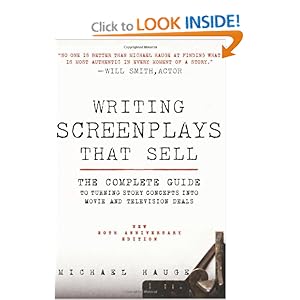
I absolutely LOVE the book, "Writing Screenplays that Sell," by Michael Hauge!

Writing Screenplays That Sell, New Twentieth Anniversary Edition: The Complete Guide to Turning Story Concepts into Movie and Television Deals
http://www.amazon.com/Writing-Screenplays-That-Twentieth-Anniversary/dp/0061791431


How often are you writing a book and you can see the characters in living color inside your head? How often do you wonder if your dialogue is where it should be, or if the story is strong enough to carry the main character to the end? Have you ever considered the importance of theme? Structure? Writing individual scenes?

I have never written a screenplay, but I can tell you when I've seen a good one and when I haven't. Perhaps the end isn't realistic and unbelievable--probably a problem with character development. The scenes jump, and don't flow. Probably a problem with structure.

The cool thing about Hauge is that he analyses the movie we all know and love, The Karate Kid. What made the movie such a success? What elements were important? Did the movie also have weaknesses?

Hauge also discusses the weaknesses of the movie; things such as predictability and a slow beginning.

Can either of these issues relate to a book you are writing?

You bet.

When it comes to writing books I tend to shy away from the punctuation type, unless I have a question that needs to be answered. But often, the best writing books are those that teach you not only how to write with flavor, but how to get an audience interested for life.

Have a favorite book on writing? I would love it if you shared it here.

Kathryn


Wednesday, October 17, 2012

Creating Realistic Characters

When writers ask me what it takes to create realistic characters, my first thought is always,"you probably already know the answer."


Photo by: Northridge Alumni Bear Facts, courtesy of Flickr
If you've spent your life out of doors and not inside a cardboard box, if you know a little bit about communication and the quirks that everyone has, if you know how to relate to children or teens or adults, then you already know how to create realistic characters.

For some reason, in writing a book, authors think they have to know something special about keeping their characters from the cut-out variety. But all a writer really needs to create a believable character is just a reminder of what folks are all about in the first place:

  • Physical characteristics
  • Emotional ways of being
  • Spiritual attributes
  • Talents and gifts
  • Flaws
What is it about your best friend that keeps her your best friend?

What is it about you enemy that keeps her standing far away?

Why do some people prefer jeans to dressing up?

Why do others hate to be bothered, while yet others like that one-on-one visit?

Creating realistic characters is a bit like life. You meet new people, you're surrounded by loved ones, and your enemies continue to stress you out, because that's what they do.

What you learn in your life associations will keep your characters realistic.

Friday, May 18, 2012

Gearing up for Free Workshop!

Okay, folks, today is the last day to sign-up for my class! Sure, you can walk in tomorrow without signing up (I'll still take you), but it's always a good idea for a presenter to know how many people are attending.

Photo by: jm3, courtesy of Flickr

We will be discussing plot. That means characterization, setting, beginnings, endings, and that thing called, "the main problem" of your character and how to solve it by the end of the book.

Having a hard time getting started on your novel? Are you about mid-way through and feeling as if the story is going down hill? Do you think all of your characters sound the same, and you want to change that? What about your setting? Are you using what you know?

These questions and more will be answered at the Writing Your Book Workshop.  Here are the details:

Date: Tomorrow! (May 19)
Time: 1-2:30
Place: Bountiful/Davis Art Center, 745 South Main Street, Bountiful

Please pass the word along, and bring a friend. I have a FREE gift for everyone who attends.

Wednesday, April 18, 2012

FREE Class Coming in May!

Hello readers and writers!

If you missed my last Writing Your Book Workshop in Ephraim, you'll not want to miss another free event coming up in May. Here's a tidbit:

Overwhelmed about writing your first book? Each of us has a book within us, and I help you find it! This FREE hands-on workshop takes you through idea, plot, setting, and characterization and gets you started on your first winning paragraph. 

Date: Saturday, May 19
Time: 1-2:30 p.m.
Place: Bountiful/Davis Art Center
            745 South Main Street
            Bountiful, Utah

To Register call the Art Center at: 801-292-0367 or contact me at: kathy@ariverofstones.com. 


Get a personally signed copy
of this book for only $10