
Get up and get writing! We're in this together!
Showing posts with label balance. Show all posts
Showing posts with label balance. Show all posts
Wednesday, March 14, 2018
Tuesday, October 30, 2012
Come and Stay Awhile: The Importance of Setting
I don't know about you, but setting is harder for me to tackle in a novel, especially if I haven't been to the place I'm writing about. And even if I have, there's still that stuff I need to check out.
I have been on a cruise, but I didn't know what happened behind the scenes. I didn't know what the captain's quarters looked like or where the food was stored. I had questions about crew cabins, jobs on a cruise ship, and what happens when someone dies on board.
Yes, this means I did some research for my book, Sunny Side-Up, though I could draw on my experience as a passenger to complete the setting.
Setting is a valuable asset to your book or short story, because with setting you get a feeling for where the characters are standing and participating. You aren't in some void, rather, the setting contributes to the characters in the book and vice versa.
In my first mystery, Scrambled, the people living in the Hotel Camaro reflected the condition of the hotel itself, which was badly in need of renovation. And since I'd never stepped foot in an old east coast hotel, I had to do some studying to make the setting right. I couldn't just use what I remembered about San Francisco to make it right, for example.
Setting isn't just about tree placement, or having a garden or making the sky blue, the setting reflects the story in a very real way and contributes to your character's success.
You want your reader to put of their feet and stay awhile. But you don't want them to get too comfortable. That's why there's tension and conflict to balance out the beautiful trees and meandering stream. That's why the old hotel with loosening bathroom fixtures, still has room to show it's beautiful wooden cornices.
Though a huge dose of setting at any given time is usually skipped over by the reader, a sprinkling of it in between dialogue lends depth and interest to your story. Are people talking all of the time? Even in real life there is time for reflection and quietness. And that's what you want in your story.
You want your reader to see the world that the character lives in. You want your reader to know why they live where they do, and how the world in which they live contributes to their happiness or lack of it.
If you can do this, your readers will want to prop up their feet and stay awhile.
I have been on a cruise, but I didn't know what happened behind the scenes. I didn't know what the captain's quarters looked like or where the food was stored. I had questions about crew cabins, jobs on a cruise ship, and what happens when someone dies on board.
Yes, this means I did some research for my book, Sunny Side-Up, though I could draw on my experience as a passenger to complete the setting.
Setting is a valuable asset to your book or short story, because with setting you get a feeling for where the characters are standing and participating. You aren't in some void, rather, the setting contributes to the characters in the book and vice versa.
 |
| Photo by: CJ Isherwood, courtesy of Flickr San Francisco |
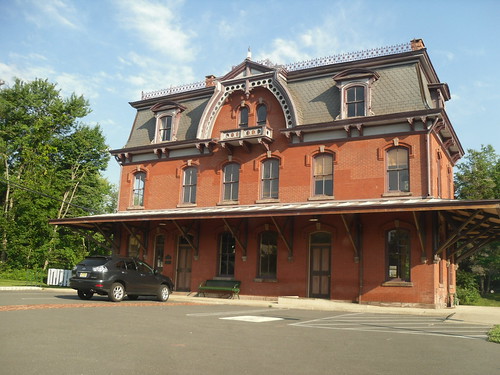 |
| Photo by: Dougtone, courtesy of Flicker New Jersey |
Setting isn't just about tree placement, or having a garden or making the sky blue, the setting reflects the story in a very real way and contributes to your character's success.
You want your reader to put of their feet and stay awhile. But you don't want them to get too comfortable. That's why there's tension and conflict to balance out the beautiful trees and meandering stream. That's why the old hotel with loosening bathroom fixtures, still has room to show it's beautiful wooden cornices.
Though a huge dose of setting at any given time is usually skipped over by the reader, a sprinkling of it in between dialogue lends depth and interest to your story. Are people talking all of the time? Even in real life there is time for reflection and quietness. And that's what you want in your story.
You want your reader to see the world that the character lives in. You want your reader to know why they live where they do, and how the world in which they live contributes to their happiness or lack of it.
If you can do this, your readers will want to prop up their feet and stay awhile.
Tuesday, September 25, 2012
What's the Hardest Part of Being a Writer?
What's the hardest part of being a writer?
I sometimes struggle with others taking my writing seriously. But when I finally stopped searching for a "job" and began my own company I think the realization hit many that what I really wanted to do was work for myself.
Sometimes I have a hard time getting to work. Because I'm at home and the house is screaming to be cleaned or the grandchildren are screaming to have some time or I'm screaming for a break, I have a difficult time focusing on the job at hand.
Writing isn't always fun. Really? Writing is work and sometimes the writing itself is a struggle. But when this happens, I pull out another writing project or spend a few moments working on a writing prompt.
Sometimes it's hard waiting for the money to come in. I don't get a regular paycheck, and sometimes I get a little stressed about that, but the stressing comes less now as my focus has changed to more important things like sharing and helping others with their own writing.
Sometimes I have too many projects and so can't focus on the most important one at hand. I get ideas often, but that doesn't mean I can do everything at the same time. Many projects are put on the back burner until the finishing up of a particular project leaves room for a new one.
The hardest part of being a writer, for me, shifts every day and depends on my mood. But I don't let a day go by without writing something.
Because I need to write.
I sometimes struggle with others taking my writing seriously. But when I finally stopped searching for a "job" and began my own company I think the realization hit many that what I really wanted to do was work for myself.
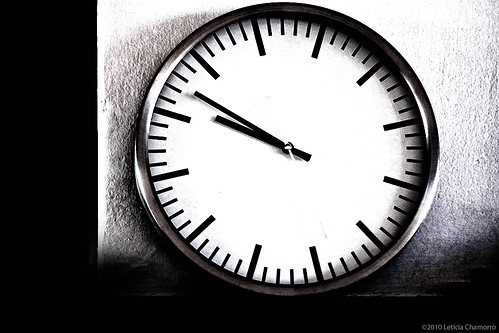 |
| Photo by lett -^=, courtesy of Flickr |
Writing isn't always fun. Really? Writing is work and sometimes the writing itself is a struggle. But when this happens, I pull out another writing project or spend a few moments working on a writing prompt.
Sometimes it's hard waiting for the money to come in. I don't get a regular paycheck, and sometimes I get a little stressed about that, but the stressing comes less now as my focus has changed to more important things like sharing and helping others with their own writing.
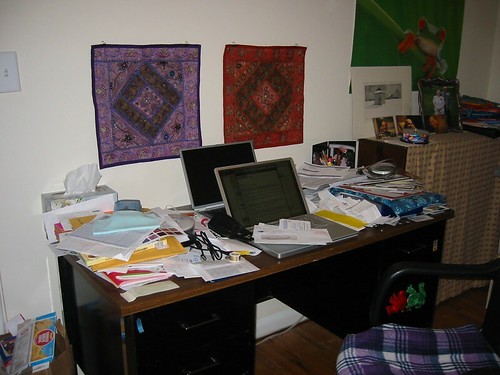 |
| Photo by: noricum, courtesy of Flickr |
Sometimes I have too many projects and so can't focus on the most important one at hand. I get ideas often, but that doesn't mean I can do everything at the same time. Many projects are put on the back burner until the finishing up of a particular project leaves room for a new one.
The hardest part of being a writer, for me, shifts every day and depends on my mood. But I don't let a day go by without writing something.
Because I need to write.
What the hardest part of being a writer, for you? Share your thoughts.
Monday, September 10, 2012
Are You a Writer? Getting Paid What You're Worth
There's been a lot of talk lately about getting paid what your worth--at least in the circles that I am a part of. And I guess this has a lot to do with the economy.
If we don't have a current job, we're searching for any job that will work.
If we do have a job, we're hoping for better. Always hoping for better.
A few of us do what we truly love, and if it's writing, we find that we love what we do (we'd better) while still dreaming of the big bucks to make it all worth it.
The funny thing about writing is, in my opinion, that it is all worth it, yes, even when we're not bringing in the bucks we think we're worth.
Getting paid what you're worth is kind of like finding a needle in a haystack--you know it's there, but the task in finding that needle makes your eyes sore and your knees weak.
And perhaps that's where we need to get. On our knees.
I am always happiest when I'm not thinking about the money I "should" be making but using my gifts and talents. When I am listening to God. When I care more about his agenda for me and less on the agenda I'd like to create for myself. And this takes a bit of daring. It's not easy to give up the control we think we have.
My husband recently got a new job and this was after much soul searching, waiting, and enjoying the life that was currently present for us. Getting that job was as much about being appreciative for what we had then as it was opening up the mind for greater things.
As a writer I don't have to be the mainstream income provider, but there are things I do to pitch in. And I find I am pitching in the best when I am more focused on creation and reaching out to others, more than I am on how much money I expect to get from my efforts.
It's always been that way for me.
If we don't have a current job, we're searching for any job that will work.
If we do have a job, we're hoping for better. Always hoping for better.
A few of us do what we truly love, and if it's writing, we find that we love what we do (we'd better) while still dreaming of the big bucks to make it all worth it.
The funny thing about writing is, in my opinion, that it is all worth it, yes, even when we're not bringing in the bucks we think we're worth.
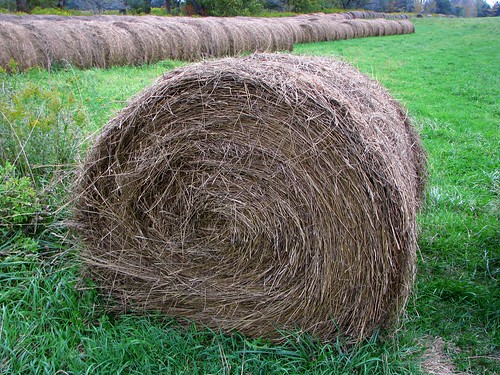 |
| Photo by: MSVG, courtesy of Flickr |
And perhaps that's where we need to get. On our knees.
I am always happiest when I'm not thinking about the money I "should" be making but using my gifts and talents. When I am listening to God. When I care more about his agenda for me and less on the agenda I'd like to create for myself. And this takes a bit of daring. It's not easy to give up the control we think we have.
My husband recently got a new job and this was after much soul searching, waiting, and enjoying the life that was currently present for us. Getting that job was as much about being appreciative for what we had then as it was opening up the mind for greater things.
As a writer I don't have to be the mainstream income provider, but there are things I do to pitch in. And I find I am pitching in the best when I am more focused on creation and reaching out to others, more than I am on how much money I expect to get from my efforts.
It's always been that way for me.
Wednesday, April 11, 2012
Using Setting in Your Writing, Especially if You've Never Been There
Setting.
It's one of those powerful additions to your book or short story that will either make it or break it. If you're writing about London, for example, but have never actually stepped foot there, it's a good idea to study up; and I'm not talking about merely looking up London online and getting a few key points.
Setting is one of those things that folks can usually tell if you've got right or wrong, because they have either visited the country or state or have lived there. I would suggest a study online, and then talking with someone who has been there, and following up this conversation with anything you can find (a movie, a documentary, a travel program) that will help you.
One thing a friend will tell you that a travel program might not is the truth about where to eat and where to stay the night. They may also share with you about the "unheard of" places that are fun to visit--even free adventures that may not be mentioned on a travel program.
How could the above picture help you with a scene involving two characters who are falling in love? Or breaking up?
Of course, setting should be balanced with dialogue. The best setting is interwoven between the things that people say, and when the words are said, we can see where the person is standing and what the surroundings look like. Especially if we're in unfamiliar territory, it's a good idea to paint a picture that the reader can see.
I have had to work on setting in my own writing and often find myself going back to my novel and adding it in later. What I do well is dialogue, but the page can be so full of it that I forget the fullness that can be achieved when both setting and dialogue are balanced.
In the end, it's all about a great story where the reader sees and feels, as if he/she is watching a movie on a big screen, what our book is all about.
It's one of those powerful additions to your book or short story that will either make it or break it. If you're writing about London, for example, but have never actually stepped foot there, it's a good idea to study up; and I'm not talking about merely looking up London online and getting a few key points.
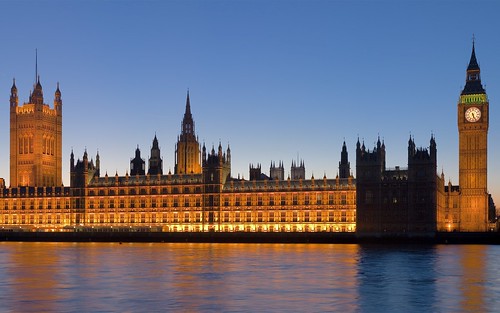 |
| Photo by: Trodel, courtesy of Flickr |
Setting is one of those things that folks can usually tell if you've got right or wrong, because they have either visited the country or state or have lived there. I would suggest a study online, and then talking with someone who has been there, and following up this conversation with anything you can find (a movie, a documentary, a travel program) that will help you.
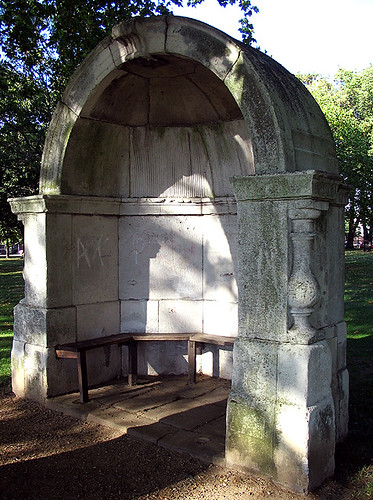 |
| Old London Bridge Alcove, Victoria Park Photo by: Fin Fahey, courtesy of Flickr |
How could the above picture help you with a scene involving two characters who are falling in love? Or breaking up?
Of course, setting should be balanced with dialogue. The best setting is interwoven between the things that people say, and when the words are said, we can see where the person is standing and what the surroundings look like. Especially if we're in unfamiliar territory, it's a good idea to paint a picture that the reader can see.
I have had to work on setting in my own writing and often find myself going back to my novel and adding it in later. What I do well is dialogue, but the page can be so full of it that I forget the fullness that can be achieved when both setting and dialogue are balanced.
In the end, it's all about a great story where the reader sees and feels, as if he/she is watching a movie on a big screen, what our book is all about.
Subscribe to:
Posts (Atom)