Showing posts with label readers. Show all posts

Friday, August 6, 2021

The Shrinking Class of Book Readers - What audiobooks can mean for your sales

Are people reading books like they used to?

Nope.

According to a 2019 Pew Research Center survey, 37% of the population read print books only. And while there are still those who don't read at all [27%] a combined total of 36% [those who read digital books only, and those who are interested in both print and digital]  together the percentage is about the same as those who read only books. Only 1% of those surveyed failed to give an answer.

What does this tell me?

Because fewer and fewer people in the United States are reading, more and more authors are vying for audiobooks in their book marketing plan. 

And why not?

Consider, as an author, being open to 73% of the U.S. population? Even further, consider what the non-readers might do if they decided to pick up a book in a manner of speaking? Would they gravitate to a print book, or would they more than likely choose an audiobook, something they can listen to on that car trip, or boring sit at the doctor's office?

Consider also that two years have passed since this study. How many more do you think are listening vs. reading?

In 2013, I began the audiobook journey with my book, "Conquering Your Goliaths: A Parable of the Five Stones."

Get it at Amazon or Audible

My recent audiobook, "I Walked With Jesus: New Testament Stories of Faith and Healing From the Least of These," will be released hand-in-hand with my print book on January 30 for the first time. I will also have an eBook released, giving me three opportunities to reach readers, whether they read in book format, digital, or listen in audio.

Some of my books, the mysteries primarily, have done better in the audio format than in print.

In a nutshell, the shrinking class of book readers opens the way for me to try new things and to get more people involved in what I love the most - books!
Wednesday, November 1, 2017

National Author's Day. What are you doing to celebrate?

Dear Readers,

I had an author interview scheduled for today, but it fell through.

Stuff happens.

As I've been thinking about what to do in place of it, it occurred to me that it's National Author's Day. Actually, I had this mostly unknown holiday written on my calendar and just now looked at it - thus, the sudden occurrence. 

Since this is also the month of that great turkey day, Thanksgiving, it also occurred to me that I wouldn't really have a job without you, the reader.

Sure, I could write until the cows came home, and perhaps this writing would help me personally, but without you, I wouldn't have much of a story. 

So, thank you. I mean it. Thank you for reading and enjoying, and reading and not enjoying my work. Thank you for reviewing, and allowing me to be on your blog with a guest post. Thank you for interviewing me, for taking take out of your busy schedule to write me a note of thanks for my newsletter. Thank you for speaking with me at book signings, even if you don't buy any of my books. 
Most of all, thanks for cheering me on. 

You know who you are.

A writer's life isn't just lonely sometimes, it's tough, and it's really nice to know that you're not alone in the world and that someone appreciates what you do.

So, 

Image result for thank you

Kathryn


Friday, June 13, 2014

Book Club Presentations that Rock


As an author, it's easy to take the casual approach to book club meetings, after all, you're probably sitting around in a circle in the living room or kitchen. You may or may not be standing, and those sitting around you know one another and because of that it might be hard to gain the attention you need.

You've probably heard of book club presentations; what you may not have heard of is book club presentations that others will remember.

Book

This is what I've discovered works for me at book club presentations:

1. Smile. There is nothing worse than a too serious writer.
2. Introduce yourself briefly. I bring along my published books and speak about my writing as I pass each book around the circle to give readers a closer view of what I've done.
3. Begin with a question. It can be related to the book that has been read by the group or a question that has to do with reading your particular genre.
4. Keep the presentation light and open to questions. Use a hand-out, so the group can follow along. Since I expect that all those attending have already read my book, I delve into questions that relate to the book's characters, setting, and plot and take the readers beyond the actual story to deeper values such as symbolism.
5. Sometime during your presentation, give away a free gift. This might be a postcard with the information about your book on it, it may be a book mark, it might even be a small gift that you've purchased that goes along with the theme of your book. (For Conquering Your Goliaths: A Parable of the Five Stones, I give away a cellophane bag of 5 labelled stones).
6. Be ready for some sales! Most of those attending will have already purchased your book beforehand, but there will always be readers in attendance who will be excited to read your new book now that they've heard a little about it.

In the end, book club presentations are a great way to now only share what you have accomplished, but allow for some great discussion and the development of new friendships!


Monday, July 8, 2013

The Oreo Effect: Is There a Way to Speed up the Publishing Process?

When I tell fellow writers that it took me 8 long years of daily writing before I published for the first time, many can't believe it. Others, on their own long journey to that first publishing gig, just smile.

They understand.

A writer must be aware of and know how to pen various writing nuances. For example, a writer must know how to write believable characters. Out of their mouths must come natural sounding dialogue in a setting that appears real, even if it's on some faraway planet. A writer must know about plot, what makes fine plot, and what doesn't, where to get ideas and how to keep writing even when they don't feel like it.

Is there a way to speed things up?

One of the best ways to know how you're doing today is to have a fellow writer, an avid reader (not in your family) or a writing mentor that can show you what you're doing right and what you need to work on. The more feedback you receive, especially early on, the more likely you'll be to speed up the process to publication because you will quickly weed out what simply doesn't work.

Another good way to speed up the publishing process is to write every day. Interspersed with writing comes reading writing books and attending conferences to learn new skills, but even then, writing every day for at least an hour a day will do wonders that listening to a great speaker will never do.

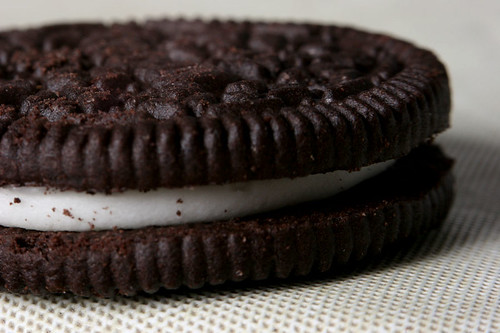
Photo by: mihoda, courtesy of Flickr
Taking criticism is only good if it's valid criticism; criticism that helps you instead of hurting you. If you find that criticism only tends to keep you from writing, take on another reader; someone who can show you what they like about your work. Someone who can also talk to you about the problem areas without making you want to storm out of the room.

I call this the Oreo Effect.

An Oreo has two black chocolate cookie sides that keep safe the inside white stuff. Without the cookie sides, the white fluff is open to the world. The white stuff is the struggles you have with writing. The black chocolate is the positive stuff that keeps you grounded. If someone who reads your work can start out with a positive, something that you do naturally such as great dialogue or perfect setting, then it's far easier to take in the white problem such as poor sentence construction or a flawed plot. Ending the conversation with something else positive, helps the writer to go on.

Now, I realize you're probably the writer and not the reader reading this post, so you might want to pass the Oreo Effect on to someone you trust.

This trusted someone can share with you what's working, what isn't, and end the conversation with a positive so that you can move forward.

The first story I wrote was terrible, but I didn't know that. I gave copies of the story to my relatives who gratefully placed it on their bookshelves. I only learned later that they thought my work was pretty bad. But no one told me. As I continued, I got some feedback from others. I joined a writer's group and this really helped me to hone my craft. I listened, sometimes, to the feedback, sometimes not. But the greatest thing I ever did for myself was to continue writing, even when the criticism was great and I thought I'd never be a good writer.

I didn't often get the Oreo Effect, but when I did, it make all the difference.

Sure, it took me 8 years. But the publishing process could have taken me much longer if I hadn't learned that writing every day, learning all I could about writing, and taking heed to much of the criticism I received, would get me a sale less than 10 years after I'd first begun.


Monday, April 29, 2013

Writing for Young Adults

If you're considering writing a YA book, you may also want to consider the following tips:

When writing your book, consider the audience. A book with 15 year olds is a good choice for someone a few years younger, and characters that are say, 16-18 are better for a 14-15 year old. The reason? When you're a teen, you want to be a bit older than you currently are. I don't know what it is about that, but until you're in your 20s, the idea of being older is the cat's meow.


Photo by: Sarah Alamimi, courtesy of Flickr

When was the last time you heard "the cat's meow"? This brings us to tip number two. How do teens speak these days? What phrases do they use? What do they say when they're frustrated, sad, excited? Now, I'm the first to admit that many teens swear, and I'm not promoting swearing here, but I like the thought of someone getting angry and using a lighter slang word to get their point across.

What happens to a teen reader that has to read a classic? Well, unless they are of the unusual variety, nothing much. Teens need action, and lots of it. They need dialogue and a smattering of setting, but not so much that they decide to skip the 'boring' parts. Teens need teens that do scary things; things they've only dreamt about, but they also need realistic stories that deal with trauma in a real and positive way.

Does your main character have cancer? How does she deal with it? Are her parents divorced? How does she feel about that?

Photo by: San Jose' Library, courtesy of Flickr
Take your YA fiction novel deep, but not so deep that the reader is wondering where they are. Whether you're writing a mystery, a romance, or an adventure, consider their age, the way they speak, and what they dream about.

If you have a hard time relating to teens in your own life, you may have a hard time writing about them. If this is the case you need to spend some quality time, or at the very least, do some focused observation.

Unless your book is taking place in the 50s or 60s when you were a kid, you'll need a sufficient update.

Write teen books yourself? What advice do you have?


This book is primarily for the middle reader, can you see why?

Monday, April 8, 2013

Where Are Readers Getting Their Books?

If you read my post from last Friday, you'll know that the topic was getting readers to read your book. The survey offered some insights on where a writer's focus should be to obtain the most readers. Today, I want to talk about:
 
"Where Readers are Getting Their Books." This survey was done by Otis Chandler of Goodreads.com. And the survey offers some great ideas on where authors should focus their time and energy for the greatest success.

Here's the list:

1. Library
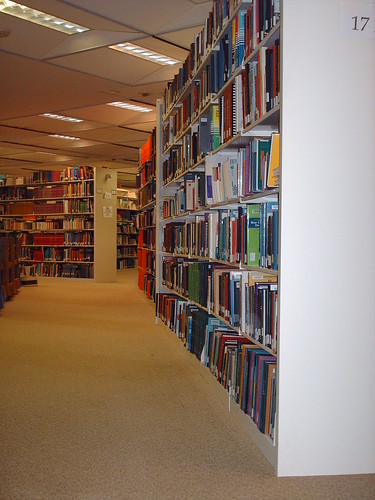
Photo by: cybrgrl, courtesy of Flickr


Photo by: kodomut, courtesy of Flickr
2. Kindle
3. Amazon
4. Borrowed
5. Nook
6. B&N Store
7. B&N.com
8. Gift
9. Apple iBooks
10. Independents
11. Costco/Target/Walmart

How important is getting your book into a library? Pretty darn important according to this survey, yes, even though the reader isn't paying for it. I've later purchased great books I've read at the library, and I have definitely told others about the books I like. Sure, my trusted friend might go to the library for the book as well, but they may also want their own copy.

When it comes to getting your book into the library, the feat isn't too difficult, unless you have a self-published book. But don't give up. It helps to know a librarian that can push it through.

And what about Kindle? So many readers now are not buying paperbacks, they are downloading the e-version. Is your new book available as an e-book?

I used to think that getting my books into Costco was a big deal, but looking over this survey I realize there are other areas more worth my time to focus on. Also, consider the book store. Many self-published authors have a difficult to impossible time getting their books into Barnes & Noble, so they try an independent bookstore. Still, readers aren't really buying books in independent bookstores, so where should an author's attention be focused?

Surveys are really amazing. What you think is important is suddenly shelved at the bottom of the list. You may even find that what you've been working hard on isn't really worth your time as compared to something else.

Another eye opener. Compare this list with the list I gave you on Friday and see what you can learn when you combine them.

Friday, April 5, 2013

What Gets Readers to Read Your Book?

Recently, I spoke at a writer's meeting and shared with the group some of my marketing ideas. At the start of the class I read a list that I'd obtained from Goodreads regarding a poll that was taken. The poll offered some insights.

Photo by: zimpenfish, courtesy of Flickr
The books that were polled were Gone Girl and The Night Circus, and the question was:
 
What Convinced You to Read the Book?

Here's the list:

1. Trusted Friend
2. Everyone talking about it
3. Book club
4. Goodreads - reviews
5. On "Best" lists
6. Sample read
7. Amazon reviews
8. Goodreads Choice Awards
9. Liked Author's books
10. Book blurb
11. Cover

Now, I was at first surprised at this list. I mean, when was the last time you heard, "Great covers sell books"? And yet, the book cover is at the last of this list. It is at the bottom of the totem pole so to speak.


Photo by: Lel4nd, courtesy of Flickr
And while I'm the first to admit that a good cover doesn't hurt, I started to think of the places I frequent and the time I give to them. If I am more concerned about my book cover than I am about talking my book up (doing the right marketing) so that someone will share it with a trusted friend, I'm in trouble.

When was the last time you offered to speak at a book club? Where do you place reviews on your to-do list? How much time to you spend on your book blurb as compared to putting out a sample read on your blog as well as the blogs of others who do it?

I also looked at the marketing done online, in person, and by those who market free for you.

The first two items on this list are done for you. I think that's significant. You must do more than sufficient marketing so that "everyone" at least appears to be talking about your book, including that trusted friend.

You must get out there personally through a book club. And, I would add, anywhere where you can be seen. That means the library, bookstore signings, writer's events, etc.

You must get your book reviewed and by enough people that your reviews will carry clout. And these are online interviews. "Best" lists are provided online, but in order to be put on a "Best" list an author must have a reason to be there. Sales numbers. Contest winnings. Sample reads are also online, as are Amazon reviews and Goodreads Choice Awards.

If your book is liked by a reader, they may just read another of your books, but consider what is above #9 on the list.

Book blurbs are on the back covers of books, and then we have the front covers of books, although both of these can also be placed on a website.

When I was at the writer's meeting, I asked the question, "When was the last time you purchased a book because of the cover?" There wasn't a response. Only a hand. And then, "I'm more concerned with other things," she said. 

We discussed the other things. Many of them were on this list.

You might want to consider them.